
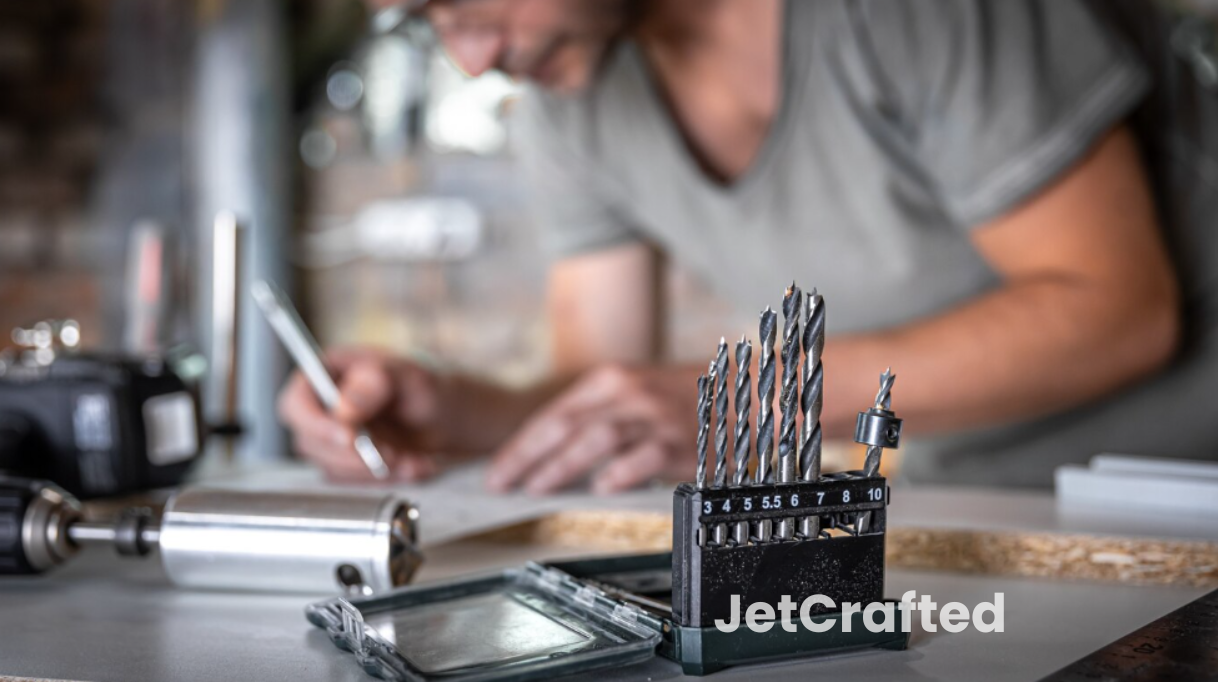
CNC manufacturing uses and combines many different machining techniques, including drilling. Now, CNC drilling tools are specifically designed to bore precise holes into a workpiece, which is why they’re crucial in creating parts that require pinpoint accuracy.
Whether you’re new to CNC or work for an industry veteran like JetCrafted, understanding CNC drilling tools is still crucial. This article will tell you more about the essential CNC machine drilling tools, their design, function, and role in various CNC operations. And most importantly, how they contribute to the overall success of your machining projects. So, let’s dive right in!
What is CNC Drilling?
CNC drilling is a machining process used by people who need to cut cylindrical holes in a workpiece. To make such holes, you need a computer numerical control (CNC) system to operate drill presses and similar equipment. Known for its accuracy and efficiency, this process is vital for making precise holes required in various applications and across multiple industries.
How Does CNC Drilling Work?
The drilling process starts before the drill bits even touch the workpiece, and it involves the following steps:
- Design. Use CAD software to create a digital workpiece design, specifying the exact locations and dimensions of the required holes. This code will control CNC machine tools, telling them how to move.
- Machine Setup. Securely fasten the workpiece to the CNC machine’s work table using appropriate CNC machine clamps or fixtures to prevent any unintended movement during drilling. Install the suitable drill bits into the machine’s spindle, ensuring they align correctly with the programmed hole locations.
- Drilling. Start the drilling operation by activating the CNC machine. The machine’s spindle rotates the drill bit while its X, Y, and Z axes move it precisely to each programmed hole location. The drill then combines rotational and axial force to cut into the material, resulting in precise and repeatable drill holes.
Types Of CNC Drilling Tools
Once you get into CNC machining, you’ll soon realize that each operation uses various CNC cutting tools, such as bores, engraving bits, face mills, etc., to achieve its goal. Drilling is no exception, and there are many types of CNC drill bits meant for different materials or for making different types of holes. You can improve machining efficiency and the quality of drilled holes by simply understanding the differences between these types.
Twist Drills
Twist drills are the most common cutting tools used in CNC machining. They consist of a cylindrical shaft with helical cutting edges that remove material as they rotate. CNC bit types for twist drills vary, including high-speed steel (HSS), famous for its versatility and toughness. The drill bit diameter determines the hole size and the tool’s suitability for different materials.
Center Drills
Center drills serve a specific purpose – to create a guide hole or a countersink for a larger drill to follow, all with the goal of ensuring precision and alignment.
Different types of center drills are used depending on the application’s requirements, such as the angle of the conical hole and the size of the center hole needed. These drills are essential in operations that require high concentricity between the center and final drilled holes.
Ejector Drills
Ejector drills, also known as ejector bits or deep hole drills, feature a unique design with one or more tubes for coolant delivery and chip removal. These bits are beneficial in deep-hole drilling applications where removing chips from the work surface isn’t that easy. They’re often paired with a lightweight core drill rig to make deep and precise holes without pecking or removing the bit to clear chips.
Spade Drills
Spade drills are a category of CNC router bits known for their replaceable cutting inserts, which can be swapped out when worn or damaged. This allows for quick changes between jobs and reduces downtime. Unlike twist drills, spade drills create holes by shaving off material with their two cutting edges, offering a cost-effective solution for larger hole-making operations.
Spade drills are distinct from other types because of their flat, spade-like cutting edges. You can find them in various sizes and use them for different drilling tasks – from roughing to finishing.
Gun Drills
Gun drills are specialized CNC drilling tools with a distinctive design, such as a single flute and a V-shaped tip. This unique construction allows gun drills to produce straight, accurate, deep holes. They’re commonly used in industries requiring precision and deep-hole drilling, such as aerospace and medical. Gun drills work exceptionally well on materials that are difficult to machine and require specialized cutting tools.
Single Flute Drills
Single flute drills are designed with one cutting edge, which provides a larger chip removal channel. This design is beneficial when working with softer materials or when a downcut bit is needed to prevent lifting of the material surface. Single flute drills come in handy for specific applications where chip evacuation and finish on the flat surface are critical.
Additional CNC Drilling Tools
Beyond these essential tools, there are a variety of other specialized tools that can improve the capabilities of your CNC machines. Some of these additional bits include:
- Reaming Tools. Drilling creates a rough hole in a workpiece, but when a high degree of accuracy and smoothness is required, reaming tools take center stage. It’s a process that slightly enlarges a pre-drilled hole to a precise diameter with a smooth finish. The reaming tools can remove only a tiny amount of material, refining the size and finish of the hole with great accuracy. They come in various forms, such as adjustable, hand, and machine reamers, each tailored for specific operations.
- Micro Drills. As the name implies, micro drills are small-sized drill bits you can use for creating tiny, precise holes, often in delicate or intricate components. They’re vital in industries where miniaturization is prevalent, such as electronics and medical device manufacturing. Micro drills require high precision in manufacturing the drill itself and the CNC drilling process, as they’re often employed in applications that demand tight tolerances and clean hole walls.
- Chipbreaker Drills. Long, continuous chips can be problematic during the drilling process, especially in deeper holes or rigid materials, as they can potentially damage the workpiece or the tool. Chipbreaker drills are engineered to break chips into smaller, more manageable pieces. This is highly beneficial in CNC machining, where efficient chip evacuation is crucial to maintaining speed and preventing tool wear.
Selecting the Right CNC Drilling Tool: Key Factors to Consider
Different types of CNC bits can handle various materials, and selecting a bit that’s not suited for the material can lead to subpar outcomes or even damage the tool. For example, a ball nose end mill might be suitable for 3D contouring but not for creating precise holes.
Here’s a quick overview of the factors that might influence your choice of drill bit.
| Factor | Description | Considerations |
| Material compatibility | The tool material and coating must be suitable for the workpiece material. | – Soft materials (aluminum, wood): HSS or carbide drills. – Hard materials (steel, titanium): Carbide drills with wear-resistant coatings. – Abrasive materials (composites, fiberglass): Diamond-coated drills. |
| Hole size and tolerance | Considering tolerance requirements, choose a drill slightly larger than the desired hole size. | – Smaller holes: Smaller flute diameter for better chip evacuation. – Large holes: Step drills or spade drills for faster material removal. – Tight tolerances: Higher quality drill bits and rigid machine setups. |
| Tool geometry | The number of flutes, point angle, and helix angle affect chip evacuation, cutting force, and surface finish. | – General purpose: Two flutes for balance and chip evacuation. – Deep hole drilling: Four flutes for efficient chip removal. – High feed rates: Increased helix angle for smoother cutting.- Precise finish: Point angle optimized for minimal burring. |
| Machine specifications | Tool shank size, spindle speed, and feed rate capabilities must be compatible with the chosen drill. | – Shank size: Match the drill shank to the machine’s collet or chuck.- Spindle speed: Higher speeds for smaller drills and softer materials.- Feed rate: Adjust based on tool diameter, material, and desired finish. |
Final Thoughts
Choosing the right CNC drilling tools can significantly affect the quality and accuracy of your final product. Each type has a unique role in machining, from twists to gun drills.
As we’ve explained through the guide, material compatibility, hole size, tool geometry, and machine specifications are critical factors in choosing the appropriate drilling tool. JetCrafted and other large manufacturers can ensure successful and efficient CNC drilling operations by considering these factors.
FAQs
1. How often should CNC drilling tools be replaced?
You should replace CNC drilling tools when wear affects performance, typically after machining 300-1000 parts. Regular inspections determine replacement frequency, depending on the material hardness, drilling speed, feed rate, and tool quality.
2. Can CNC drilling tools be re-sharpened?
Yes, CNC drilling tools can be re-sharpened to extend their lifespan. Professional re-sharpening restores cutting edges, but the tool diameter slightly reduces with each service.