
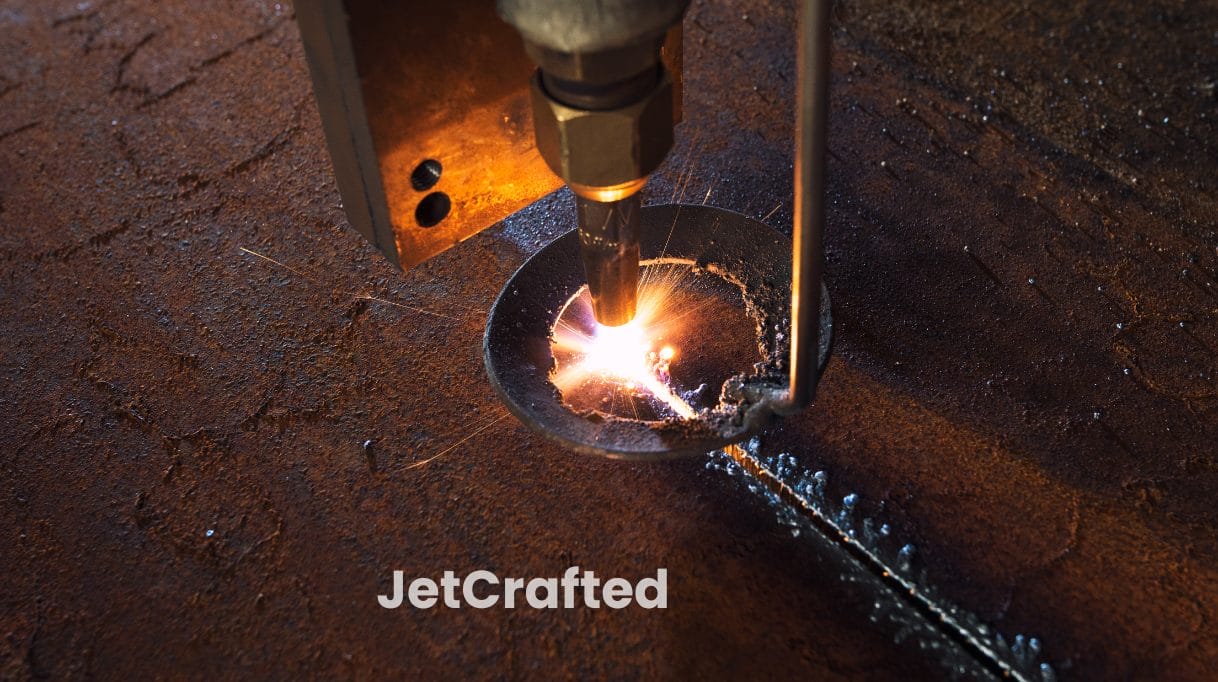
In the world of metal fabrication, there are multiple methods at your disposal for cutting materials like metal, steel, aluminum, and more. Two of the most popular options that often star in any conversation on the subject are waterjet cutting and plasma cutting.
Both methods have their advantages and disadvantages, which is why the debate on whether to use a water jet or plasma cutter is one that needs settling.
Choosing the best method for your needs depends on various factors, such as the type of material, precision involved, associated costs, and similar. This article will provide a thorough comparison of waterjet cutting and plasma cutting, exploring their working principles, applications, pros and cons, and cost considerations. Read on to find out which one is better.
Understanding Water Jet Cutting
Before we go further, let’s address the question – what is waterjet cutting? – one of the two aspects crucial to the water jet cutter vs plasma cutter debate.
Waterjet cutting is a versatile and precise cutting method that uses a high-pressure water stream propelled through a cutting head. The water can be mixed with abrasive materials, such as garnet, to increase the range of materials susceptible to this cutting method.
The waterjet cutting process involves directing the high-pressure stream of water onto the material, causing cuts by way of erosion, leading to a clean and precise cut. This method is known for its ability to cut through various materials (metals, plastics, stone, and even food), like a hot knife going through butter.
The high-pressure pump of a waterjet cutter pressurizes water up to 50,000 psi or higher, depending on the application. The pressurized water passes through a mixing chamber next to cutters, where abrasive materials are also featured. This mixture then travels through a nozzle, which is what you can use to focus the stream and direct it onto the material.
People new to the process often wonder – is waterjet cutting dangerous? The answer is that it’s no more dangerous than any other cutting method and merits careful handling, as well as the mandatory use of safety measures and protocols.
Advantages of Waterjet Cutting
Waterjet cutting offers several important advantages over other cutting methods, making it a preferred choice for many varied applications. A few of the key benefits of waterjet cutting include:
- Versatility. Waterjet cutting can easily cut through a very wide range of materials, including metals, ceramics, composites, glass, and stone, to mention a few. This versatility makes it suitable for many different industries, like automotive, aerospace, architecture, and manufacturing.
- Precision. Waterjet cutting provides very high precision and pinpoint accuracy. This results from the process’s ability to achieve tight tolerances and produce intricate shapes and designs seamlessly.
- Lack of Heat-Affected Zones. One of the biggest pros of waterjet cutting is the fact that it’s a cold-cutting process. During cutting, regardless of the thickness of materials, there is an evident lack of formation of heat-affected zone (HAZ). This eliminates the risk of distortion or warping of the material.
- Minimal Material Waste. Waterjet cutting produces very little material waste compared to other cutting methods: a narrow kerf width and the precision of the cutting stream guarantee optimal and efficient material utilization.
- Environmentally Friendly. Water jet cutting is an environmentally friendly cutting method. There’s no production of harmful fumes, gases, or heat, and the water used in the process can also be recycled.
Disadvantages of Water Jet Cutting
The reality of waterjet cutting is that despite its many advantages, there are also certain limitations tied to it. Some of these disadvantages include:
- Slower Cutting Speed. Waterjet cutting requires more time than other cutting methods, like plasma cutting. The cutting speed depends on the material’s thickness and hardness, which makes it somewhat complicated to use for high-volume production.
- Higher Upfront Cost. A waterjet cutting machine is costly to obtain, coming in slightly expensive for purchase and set up compared to alternative cutting methods. Its components, like high-pressure pumps, abrasive materials, and specialized nozzles, further add to the initial investment.
- Maintenance and Consumables. Waterjet cutters require regular maintenance, which is true for all cutting methods. However, the news about the replacement of consumables like abrasive materials and nozzles affects the maintenance process, which is crucial for unimpeded waterjet cutting operations.
What is Plasma Cutting?
The second key aspect of the plasma cutting vs. waterjet battle involves a working understanding of the process of plasma cutting. These machines are widely used for cutting electrically conductive materials, mostly aluminum and steel variations, including stainless steel.
The mechanism revolves around using a high-temperature plasma arc to initially melt and eventually sever the material, resulting in a precise and clean cut. Famous for its speed and efficiency, plasma cutting is one of the most popular choices in the automotive, construction, and metal fabrication industries.
A crucial part of a plasma cutting machine is a torch that generates the high-temperature plasma arc. It does this by passing an electric current through a gas (argon, nitrogen, or oxygen) before directing it toward the material. As it comes into contact with the arc, the material starts melting along the point of contact, resulting in cuts. A high-velocity gas clears the molten metal, producing a smooth cut.
Advantages of Plasma Cutting
Let’s explore some of the key benefits that plasma cutting offers, which turn it into such a potent cutting method and a direct rival of waterjet cutting:
- Speed and Efficiency. Plasma cutting is a method popular for its impressive cutting speeds, making it ideal for high-volume production. Material thickness doesn’t significantly impact the speed of operation of plasma cutters.
- Cost-Effective. Plasma cutting is generally more cost-effective than waterjet cutting, particularly when thicker materials are the target. A lower upfront cost, along with genuinely lower maintenance requirements, turn it into a very attractive option for many businesses.
- Versatility. Plasma cutting boasts a very wide range of versatility, suitable for cutting a lot of electrically conductive materials, making it particularly useful in industries such as automotive, construction, and manufacturing.
- Cut Quality. The quality of the plasma cuts depends on several factors, such as the type of plasma gas, cutting speed, and torch design. Overall, plasma cutters are around the same level of cut quality as waterjet cutters.
Disadvantages of Plasma Cutting
Where there are benefits, it’s only natural to expect certain drawbacks as well. Some of the disadvantages related to the use of plasma cutters include:
- Heat-Affected Zones. A plasma cutter generates significant heat, which creates heat-affected zones (HAZ) on the material. This is an unwanted side effect, as it results in distortion of the material or even warping, particularly in the case of thin and sensitive materials.
- Limited Material Compatibility. Plasma cutting is primarily aimed at cutting electrically conductive materials. This makes it rather difficult to use in cases involving non-conductive materials like plastics, ceramics, or stone.
- Edge Quality. The edge quality produced by plasma cutting isn’t as smooth as waterjet cutting due to the heat-affected zones. Usually, additional finishing or machining operations follow cutting with a plasma torch to achieve the desired surface finish.
Water Jet or Plasma Cutter: Head-to-Head
Since you’re now aware of the pros and cons of both waterjet cutting and plasma cutting, let’s now peg them one against the other to figure out which one suits your needs better. Several key factors directly influence the basic operating efficiency of both methods:
- Material Compatibility. Waterjet cutting is extremely versatile and can accommodate cutting through a wide range of materials. It’s not bound by the same limitations, making it exclusive to electrically conductive materials. Furthermore, it can cut materials of various thicknesses. This gives the edge to waterjet cutting, as plasma cutting doesn’t cover the wide range of materials that waterjet cutting can.
- Precision and Accuracy. In this aspect, waterjet cutting is once again seen as the superior option. Its ability to achieve tight tolerances and produce extremely precise shapes and designs. The absence of a heat-affected zone also works in favor of this cutting method.
- Cutting Speed. Plasma cutting wins the speed race, able to work at stunning velocities. It goes through thick materials quickly and efficiently, significantly reducing production time. Waterjet cutting underperforms plasma cutting in terms of speed, especially when cutting thicker materials. The type of material, though, will ultimately define the choice of method regardless of thickness.
- Cost Considerations. Regarding the water jet cutter vs. plasma cutter cost, plasma cutting is more cost-effective than waterjet cutting. Plasma-cutting machines cost less and are easier to set up, making them more accessible for small to medium-sized businesses. In the long run, comparing operating costs depends on whether the amount of consumables (abrasives, nozzles, etc.) for plasma cutting outweighs the savings in material and time that waterjet cutting offers.
- Edge Quality and Surface Finish. Edge and surface aesthetic post-cutting go the way of waterjet cutting. Unlike plasma cutters, the absence of heat during the cutting process results in minimal distortion and an excellent surface finish, requiring no additional operations.
Which Cutting Method to Choose?
Choosing between waterjet cutting and plasma cutting depends on many factors, as shown above. Several different things determine the best cutting method for a specific need, which means that your preferences will change if your project does as well.
Also, remember that it’s not just the debate on water jet cutting vs laser cutting you need to consider. Your project’s goals might require different options, with sometimes the options leaving wire edm vs waterjet cutters in focus.
Here are a few things to keep in mind when selecting the best cutting method for your project:
- If you require high precision, versatility, and the ability to cut a wide range of materials, waterjet cutting is your ideal choice.
- If speed and cost-effectiveness are your priorities on a project involving electrically conductive materials, plasma cutting may be the better option.
- Material compatibility and thickness requirements of your project are also important, with waterjet cutting suitable for both conductive and non-conductive materials.
- Evaluate your operating costs. Plasma-cutting machines are significantly more affordable upfront and, as a result, are a better financial option because of the fewer consumable and maintenance costs.
Ultimately, the choice between waterjet cutting and plasma cutting depends on the specific needs of your project. Reaching out to metal fabrication experts for consultation helps you figure out the best cutting method for your application.
Conclusion
All in all, waterjet cutting and plasma cutting are both efficient and reliable cutting methods in the world of metal fabrication. Waterjet cutting offers more in the sense of versatility, precision, and the ability to cut a wide range of materials without negative side effects. Plasma cutting, on the other hand, has the advantage of speed and cost-effectiveness.
When choosing between a water jet or plasma cutter, look at all the factors that determine how effective a method is. Material compatibility, precision requirements, cutting speed, cost considerations, and surface finish are your key parameters to gauge. Other than that, the educated opinion of an expert will also go a long way in helping you make the decision.
FAQs
1. How do waterjet and plasma cutting compare in terms of noise levels?
Waterjet cutting is generally quieter than plasma cutting, the difference being the noise generated by the high-velocity plasma arc.
2. Can waterjet and plasma cutting be used together?
Yes, in some cases, both methods can operate together. One example is doing rough cuts with plasma cutting before turning to waterjet cutting for finishing precision.
3. What is the learning curve for operating Water Jet and Plasma Cutting machines?
Both processes require you to undergo specialized training, but in general, plasma cutting is often considered easier to master.