
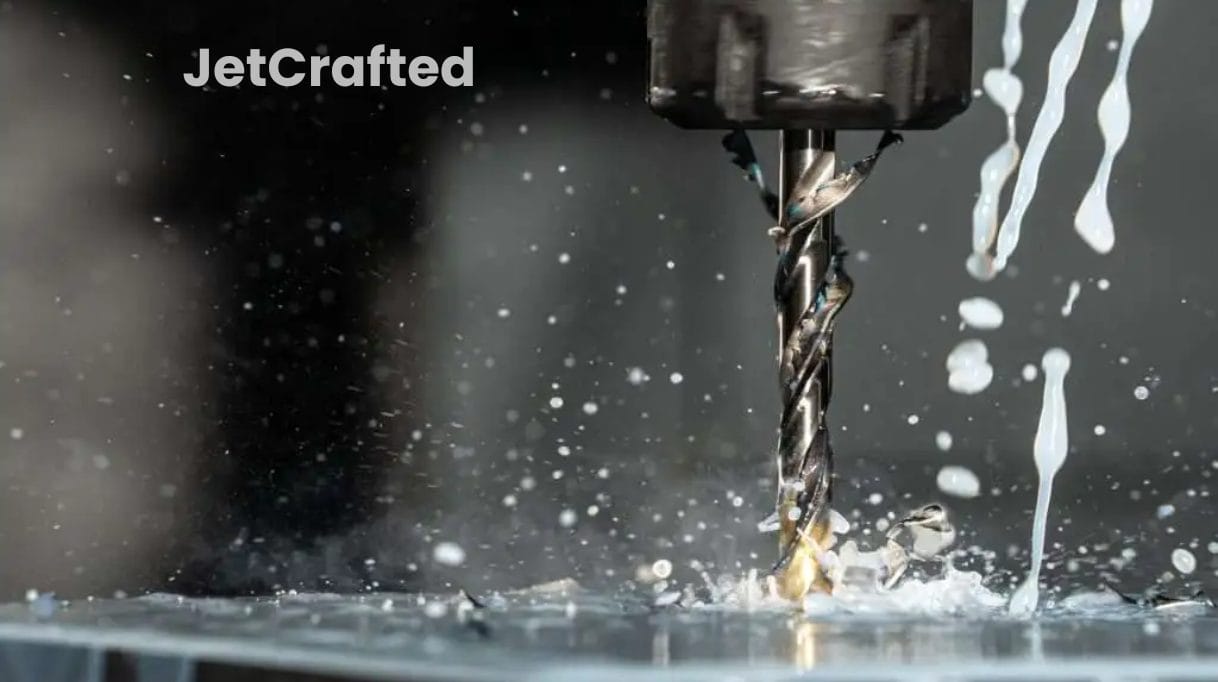
If you’re curious about how to make precise holes in materials like metal, wood, or plastic, you might want to learn about CNC drilling. This process uses computer-controlled drills to make holes quickly and accurately. So, what is CNC drilling exactly? Well, it’s a technique where a rotating drill bit makes a hole in a material.
Unlike manual drilling, CNC drilling allows for precise control over the drilling process, including the hole’s depth, angle, and diameter. This method isn’t just about making simple holes. It’s also about how efficiently and precisely these holes can be made. The CNC drilling feeds and speeds determine how fast the drill bit cuts into the material, affecting the quality and accuracy of the hole.
CNC drilling and other CNC manufacturing processes are used in many industries, including automotive, aerospace, and electronic, as they can produce high-quality parts with consistent accuracy. So, let’s dive in and find out more about this process.
How Does CNC Drilling Work?
CNC drilling is a machining process that uses computer numerical control and computer-aided design software to create precise holes in a workpiece. This software dictates the drilling locations, depths, and speeds, ensuring that each hole fits exact specifications. This level of precision sets CNC drilling apart from manual drilling operations, where human error can lead to inconsistencies.
During the machining operations, different types of drill bits are used depending on the material of the workpiece and what you want to make from it. For example, twist drills are commonly used for creating cylindrical holes, while other specialized bits may be used for CNC countersinking or enlarging previously drilled holes. The computer software guides the drill bits and selects the appropriate speed and feed rate, optimizing the CNC drilling process.
From the initial design phase, where the drilling pattern is conceptualized and programmed, to the final execution, where the drill bit pierces the material under computer guidance, each step is meticulously controlled. That ensures that the drilling is done with the utmost accuracy, whether you’re working with metal, plastic, or any other material.
When Is CNC Drilling Used?
You’ll find there are many applications of CNC drilling in various industries, each demanding precise hole dimensions that only this method can provide.
- In the aerospace sector, CNC drilling is used to create accurate holes in engine parts, fuselage components, and other critical pieces.
- In the automotive industry, manufacturers rely on this technique for engine blocks, transmission cases, and brake systems, where even the slightest deviation could lead to failure.
- The electronics industry also benefits from the precision of CNC drilling, using it to place holes in circuit boards and housings that must fit together with exacting precision.
There are many advantages to choosing a CNC drilling machine operation over manual drilling, especially for projects where you must produce the exact part multiple times. Manual drilling might be good enough for simple, one-off tasks or hobbyist projects but lacks the repeatability and precision CNC drilling offers.
With CNC drilling, you can program your specifications into the machine, ensuring that every hole is drilled at the exact depth, diameter, and angle required without the variability that comes with human operation. This automation not only increases efficiency but also reduces the likelihood of errors, saving time and materials in the long run.
Types of CNC Drilling Operations
There are many types of drilling operations you can do with one of these machines, and each type serves a specific purpose. Knowing which one to use can significantly improve your results depending on your project’s needs.
Let’s look at some of the most common drilling operations you’ll come across.
- Spot Drilling. This involves creating a small divot or “spot” on the material’s surface. The spot acts as a guide for subsequent drilling operations, ensuring that drill bits don’t wander off course when you’re drilling deeper holes.
- Deep Hole Drilling. This operation is all about creating holes that are significantly deeper than their diameter. If you’re working on a project that requires channels for wiring or needs to house long bolts, deep-hole drilling is your go-to technique.
- Counterboring. A technique to use when you need a hole that can accommodate a screw or bolt head so that it sits flush with or below the surface of your material. It makes the top portion of the hole bigger, allowing for hardware to be installed neatly without protruding. The technique of CNC counterboring is great for aesthetic purposes and where the aerodynamics or smoothness of a surface is critical.
- Reaming. A precise operation designed to enlarge existing holes and improve their finish slightly. After a hole has been drilled, it might not be perfectly smooth or might have a slightly inaccurate diameter, so CNC reaming cleans up these imperfections, ensuring the hole is of the exact size and has a smooth finish.
Types Of CNC Drilling Machines And Their Uses
Different CNC machines are used for the specific task of drilling, each designed to meet different requirements and applications. These machines use a rotating cutting tool to bore holes into the material, a process essential for countless manufacturing tasks. Among these, certain types of CNC drilling machines stand out for their specialized uses.
Micro Drill Press
This machine is specifically designed to create small, precise holes with diameters often measured in microns. Unlike larger drills, the micro drill press is designed for delicate work where every millimeter counts. The precision and control offered by micro drill presses make them an invaluable tool in industries that need minuscule details.
Common applications include:
- Circuit board manufacturing, where precise holes are needed for electronic components
- The medical and dental industry relies on this type of drilling machine to manufacture medical devices that often require minuscule and highly accurate holes.
- Drilling delicate holes in beads, findings, and even gemstones for jewelry-making
- Precise drilling of tiny holes in watch movements and other components for watch-making
Gang Drilling Machine
This machine is used in operations that require you to drill multiple holes simultaneously. It uses a row of drills aligned side by side, each capable of operating independently or together. The spindles can be set at different heights and equipped with various drill bits, making the gang drilling machine extremely versatile.
It’s particularly useful in situations where a piece needs to have multiple holes of different sizes drilled at the same time or in quick succession. The industries that most commonly use this type of machine are:
- In the automotive industry, where components often require uniform holes for screws and bolts.
- Furniture making also benefits from gang drilling machines, as they can quickly prepare wooden parts for assembly.
- In machinery making, where components must be robust and precisely aligned, the gang drilling machine ensures that holes are drilled consistently and accurately, making assembly seamless.
Multiple Spindle Drilling Machine
As the name suggests, this machine is equipped with several spindles. This design allows it to perform multiple drilling operations simultaneously, significantly increasing productivity. By securing the workpiece and using multiple work heads, this machine can create several holes at once, reducing the time required for drilling operations.
This CNC machine is often used to make furniture where consistent spacing and depth are critical. It’s also used to produce car and airplane parts and create various mechanical components that require multiple, precisely drilled holes.
The benefits of using a multiple-spindle drilling machine include:
- Improved productivity
- Uniformly produced work
- Less need for manual labor
- Lower production costs
Radial Arm CNC Drill Press
This type of drill press has a radial arm that can be adjusted to position the drill above the workpiece. This allows for greater versatility in drilling, as the arm can be moved to drill holes at different positions and angles without the need to reposition the stationary workpiece. That makes the radial arm CNC drill press particularly useful in scenarios where the workpiece is large or awkwardly shaped, making it difficult to move.
Some common uses for the radial arm CNC drill press include:
- Construction of large steel frames, where multiple holes need to be drilled at various angles and positions
- Creation of custom furniture, where unique designs often require drilling at unconventional angles
- Maintenance and repair of heavy machinery, where the ability to drill precisely in tough-to-reach areas can save time and resources
Upright CNC Drill Press
This machine is placed vertically and is typically used for drilling holes in smaller workpieces. Besides drilling, this drill press can also be used to do some shallow CNC boring, making it a versatile choice for projects involving small parts.
Compared to other types of drilling machines, the upright drill press is more suited for jobs that require precise and detailed work on smaller components.
This drill press is used in automotive manufacturing to drill precise holes in engine blocks and other components. Aerospace companies use it to fabricate parts with tight tolerances, and electronics manufacturers use it to create circuit boards and housings with meticulously placed holes.
Turret Type Drilling Machine
This machine stands apart thanks to its ability to house multiple drill bits at once, which allows for quick changes between drilling operations without the need for manual bit changes. That significantly reduces the downtime of the machine and increases efficiency. This type of machine is particularly useful for larger, more complex projects.
Industries such as automotive, aerospace, and construction benefit greatly from the versatility and efficiency of turret-type drilling machines. The ability to swiftly switch between different drilling applications without compromising on precision makes the turret-type drilling machine a valuable asset in any production line.
What Parts Make a CNC Drilling Machine
At the center of all drilling operations, you have the drill bit, the main tool responsible for the actual drilling into the material. The variety in drill bit types allows for different kinds of holes to be created, catering to specific project needs.
Next is the work table, where your material sits. It’s designed to be sturdy and precise, ensuring that your workpiece is held securely in place during the drilling process.
Then there’s the control panel, your command center. Through it, you input the necessary instructions and parameters for the drilling job. This includes depth, speed, and position, allowing for operations to be highly customizable according to your project’s requirements.
The coolant system prevents overheating by regulating the temperature during drilling. This protects the drill bit from potential damage, ensures the longevity of your machine, and maintains the quality of your workpiece.
Benefits of CNC Drilling
One of the most notable advantages of CNC drilling is the improvement of accuracy and consistency across your projects. This method allows for precise drilling down to the minutest details, ensuring that every hole is exactly where it needs to be every single time.
This level of precision is hard to achieve through manual methods, making CNC drilling a go-to for tasks that demand exactness.
Another significant benefit is the way it boosts efficiency and productivity. With CNC drilling, you’re able to complete more tasks in less time compared to traditional drilling methods. This is because the machine can operate continuously without needing breaks and can also perform multiple drilling operations simultaneously.
Moreover, CNC drilling shines when it comes to handling complex drilling that would be almost impossible to achieve manually. Whether it’s drilling holes of varying sizes at specific angles or working with difficult materials, CNC drilling machines can be programmed to meet these complex needs without a hitch.
Then, there’s the reduction in labor costs and human error. Since the drilling process is automated, you need fewer hands on deck, helping you save on labor costs. Plus, with the machine following precise commands, the margin for error is significantly reduced, leading to fewer mistakes and less waste.
Another noteworthy advantage is the improved safety the machines can give you. Because there’s very little direct involvement of the operators, their exposure to potential hazards is minimal. This not only helps in keeping your team safe but also contributes to a more streamlined and efficient production process.
How to Choose a CNC Drilling Machine
When you’re in the market for a CNC drilling machine, focusing on a few key factors can make your decision much simpler and more effective. Some of the things you have to consider are:
- Material Compatibility. Different CNC drilling machines handle various materials differently, from metals like steel and aluminum to plastics and composites. Knowing the types of materials you plan to work with most often will help you choose a machine that can handle those materials.
- Size and Capabilities. This includes the machine’s physical dimensions and ensuring it will fit in your space. It also includes its power, speed, and the size of the parts it can accurately drill. If you’re working on larger projects or need to produce parts at a higher volume, you’ll need a machine that can keep up with your demands without sacrificing quality. On the other hand, if your work is more detailed and on a smaller scale, a compact model might be more appropriate.
Quick Comparison
If you’re trying to decide between the CNC drilling machines we mentioned above, here’s a quick comparison to make the process easier for you.
| Feature | Micro Drill Press | Gang Drilling Machine | Multiple Spindle Drilling Machine | Radial Arm CNC Drill Press | Upright CNC Drill Press | Turret Type Drilling Machine |
| Workpiece Size | Very small | Small to medium | Small | Small to medium | Small to medium | Small to medium |
| Number of Spindles | 1 | Multiple (typically 4-6) | Multiple (configurable) | 1 | 1 | Multiple (typically 2-6) |
| Pros | High precision, good for delicate work | Efficient for multiple holes, cost-effective | Highly efficient for high-volume production | Large working area, flexible for odd shapes | Versatile, good for basic drilling and tapping | Fast tool changes, efficient for multiple hole sizes |
| Cons | Limited power and capacity | Lower precision than dedicated machines | Limited flexibility | Less precision than upright drills | Less workspace than the radial arm | Higher cost than upright drills |
| Best suited for | Jewelry, model making, small electronics | PCB drilling, sheet metal fabrication | High-volume parts with many holes | Large, irregularly shaped workpieces | General drilling, tapping, reaming | Complex parts with multiple hole sizes and operations |
Maintaining Your CNC Drilling Machine
Regular upkeep minimizes downtime and prolongs the lifespan of your equipment. Routine maintenance for your CNC drilling machine should include the following:
- Cleaning after each use to prevent the buildup of material debris
- Lubrication of moving parts to reduce wear and tear. You should always follow the manufacturer’s recommendations for the type of lubricant and how often to do it.
- Inspecting the drill bits and replacing them when they become dull
When it comes to troubleshooting common issues, listening to your machine can save you a lot of time and resources. Unusual noises or vibrations can indicate misalignments or loose components that need adjustment. Overheating might suggest issues with the coolant system or excessive friction somewhere in the machine.
It’s also wise to regularly check electrical connections and controls for signs of wear or failure, as these can lead to sudden stops or incorrect drilling operations. Keeping a log of all maintenance and troubleshooting actions can help you track the machine’s health over time and predict when certain parts might need attention.
Which Materials Are Suitable for CNC Drilling
Not all materials behave the same under the drill bit. Metals, plastics, and wood are among the most commonly used materials, each with unique benefits. Metals like aluminum and stainless steel are favorites due to their strength and durability.
Aluminum, in particular, is lightweight and has excellent machinability, making it easier to drill with precision without wearing down the equipment quickly. Stainless steel, while tougher to drill through, is resistant to corrosion, which is vital for parts exposed to harsh environments.
Plastics, including ABS, polycarbonate, and PTFE (Teflon), are also widely used in CNC drilling. These materials are versatile and easy to shape and drill. ABS and polycarbonate are mostly used for their balance of strength and flexibility. On the other hand, PTFE is resistant to heat and chemicals, which is why it’s often used in more specialized projects.
Wood is another material that’s well-suited for CNC drilling, especially in creating furniture or decorative items. Softwoods and hardwoods can be easily drilled into to create intricate designs or joinery parts. The choice between softwood and hardwood will depend on the specific requirements of your project, such as the desired finish or durability.
What Is CNC Drilling: The Final Word
Now that you understand what is CNC drilling, you can see why its versatility and precision make it a go-to method in modern manufacturing. From creating intricate components in aerospace to crafting detailed parts in the automotive industry, CNC drilling offers unparalleled accuracy and efficiency.
Whether you’re a large-scale manufacturer looking to streamline your production process or a hobbyist eager to bring your projects to the next level, CNC drilling can significantly improve the quality and speed of your work.
So, if you’re looking to push the boundaries of what you can create and achieve, consider the many benefits that CNC drilling has to offer. It’s a decision that could transform your projects and lead you to new heights of manufacturing excellence.
FAQs
1. Can CNC drilling be used on all types of materials?
CNC drilling isn’t a one-size-fits-all solution. It works great on metals, plastics, and wood but struggles with super hard materials like certain ceramics or alloys. The material’s durability and how it reacts under intense heat and pressure play big roles in whether CNC drilling is a good fit. So, while versatile, it’s not perfect for absolutely everything.
2. How does CNC drilling compare to traditional drilling?
Thanks to its computerized control, CNC drilling offers precision and speed that traditional drilling can’t match. This means you can expect more accurate holes, consistent results, and faster production times. However, it does require a bit more setup and programming upfront, which might not always be ideal for super quick, one-off jobs. In essence, CNC brings efficiency and precision to the table.
3. Can CNC drilling machines be used for operations other than drilling?
CNC drilling machines are pretty versatile and can often handle more than just drilling. Many are equipped to perform tasks like milling, tapping, and even counterboring, depending on the machine’s specific setup and tooling capabilities. This makes them a handy tool in the workshop, capable of tackling a variety of operations without needing to switch between different machines.
4. How to choose the best CNC drilling machine for a project?
Choosing the best CNC drilling machine for your project hinges on understanding your project’s specific needs. Consider the material you’ll be working with, the size and complexity of the holes needed, and your production volume. Look for a machine that can handle the material and part size you’re working with and one with the right balance of speed and precision. Don’t forget to factor in future projects, too.
5. Is CNC drilling cost-effective for small-scale projects?
If your projects often fall on the smaller side, CNC drilling might seem like a big investment upfront, but it can be cost-effective in the long run. It reduces the potential for errors, saves time with its precision and speed, and can handle complex drilling tasks that might otherwise require multiple setups or tools. CNC drilling could be worth it if your small-scale projects require high-quality drilling work or you plan on scaling up.
6. What are the most common problems with CNC drilling machines?
The most common problems with CNC drilling machines often involve software glitches, mechanical wear and tear, or issues with the workpiece clamping system. Misalignment and dull drill bits can also lead to poor-quality holes and increased machine stress. Regular maintenance and keeping the machine clean, along with timely software updates and using the correct tooling, can help avoid these issues and ensure smooth operation.