
Waterjet cutting is a revolutionary technology that has completely transformed the manufacturing and fabrication industries. This method allows for precision cuts on a wide range of materials, including metal, stone, glass, and even plastic.
But have you ever wondered about the origins of waterjet cutting and the mastermind behind this incredible invention? In this article, we’ll delve deep into the history of waterjet cutting, exploring the invention itself, its origins, and the inventor who brought it to life.
What is a Waterjet Cutter?
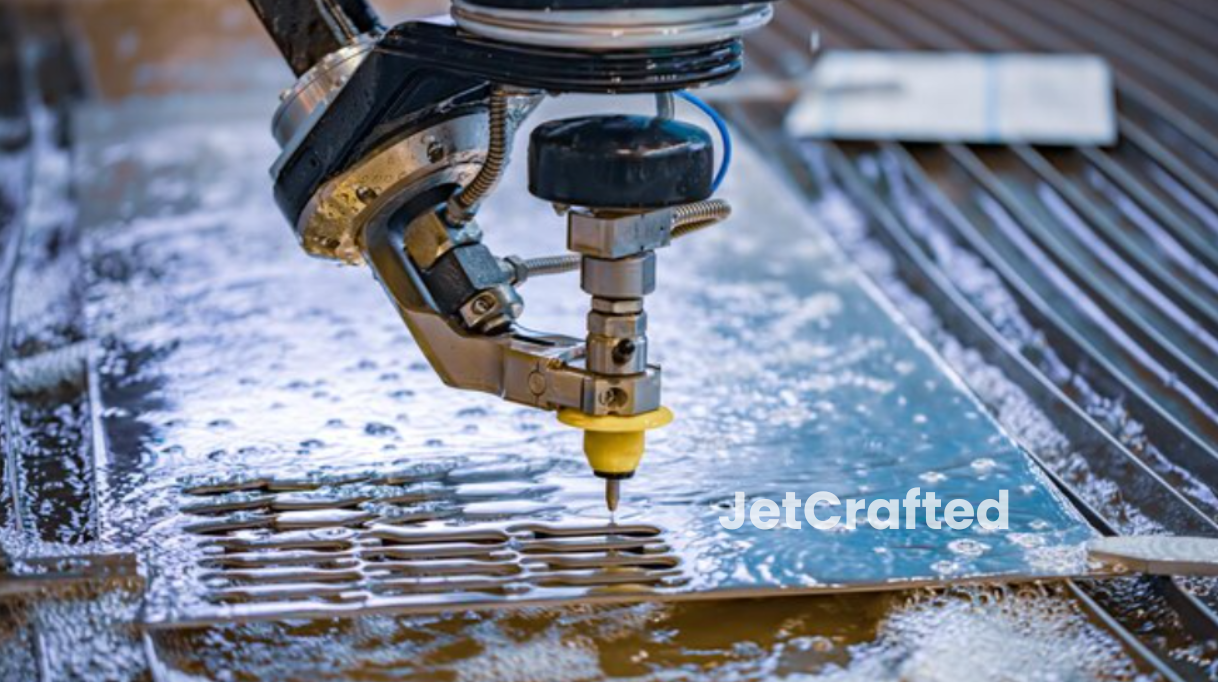
Before we tell you all about the history of waterjet cutting, let’s explain what a waterjet cutter is. It’s a tool that uses a high-pressure jet of water, often mixed with an abrasive substance, to cut material precisely and accurately. Because it’s directed through a stainless steel nozzle, the water jet can create a concentrated stream and slice through even the toughest of substances.
Waterjet cutting is a clean and efficient method for cutting and shaping materials. It’s also cost-efficient. The process doesn’t generate heat that could potentially warp or distort the material, which is why it can cut soft materials and heat-sensitive objects.
History of Waterjet Cutting: The Early Years
Waterjet cutting technology has a rich history. The Romans were the ones who started using water as a cutting method back when it was used for extracting soft materials from mines. They employed non-pressurized water to wash away deposits in gold and tin mines. However, it wasn’t until the 1850s that waterjet cutting was first used in a more advanced manner.
Who invented Waterjet Cutting?
During the American Gold Rush, mining engineer Edward Matteson introduced pressurized water as a cutting tool. By diverting water from a holding pond above the mine and channeling it through a canvas hose into a giant iron nozzle called a monitor, high-pressure streams of water were created. This allowed miners to cut through rock deposits and extract gold more efficiently.
The practice of using pressurized water for cutting became more popular in the mid-19th century when coal miners in New Zealand and Russia used water jets to excavate coal and remove debris. As soon as the water pressure increased, miners could finally achieve higher cutting capabilities.
Key Waterjet Cutting Developments Over the Years
The true potential of waterjet cutting was realized in the 1930s when The Paper Patents Company patented the first waterjet cutting machine, which was initially used for measuring and cutting reams of paper. In 1935, Elmo Smith introduced the idea of adding abrasive particles to the water stream, enabling the water jet to cut through harder materials like wood and rubber.
However, the challenge at the time was developing a reliable high-pressure pump that could pressurize the water to the necessary levels. This finally happened in the 1940s when high-pressure seals were developed for hydraulic systems in the aviation and automotive industries.
By the 1950s, waterjet cutting technology had significantly evolved. Engineer Dr. Norman Franz, known as the waterjet inventor, conducted experiments with abrasive waterjets, all with the goal of demonstrating how effective they are in cutting lumber and other materials.
The Evolution of Waterjet Cutting Technology
The history of waterjet cutting spans centuries. Many innovations contributed to its evolution so that we can finally have the efficient and versatile technology we know today – from the Romans’ use of water for mining to the introduction of pressurized water during the American Gold Rush.
Advancements in High-Pressure Waterjets
In the middle of the 20th century, improvements in high-pressure waterjet systems took waterjet cutting to new heights. After Norman Franz conducted his experiments with high-pressure water jets, the ability to develop waterjet systems capable of reaching pressures up to 100,000 psi became a feasible option. His breakthroughs changed the perception of what waterjet cutting is and opened up new possibilities for its use.
In the 1970s, the Bendix Corporation introduced corundum crystal waterjet orifices, enabling waterjet cutting systems to withstand pressures of up to 60,000 psi. This is what made waterjet cutting commercially viable and cost-effective compared to traditional cutting methods, albeit raising the question – is waterjet cutting dangerous for operators?
Development of Precision and Control
In the 1970s, John T. Parsons revolutionized waterjet cutting by developing the Numerical Control (NC) system, which would later mark a significant advancement in the industrial application of waterjet cutting. This system allowed for precise control over the waterjet, enabling the creation of complex shapes automatically.
Throughout the 1960s and 1970s, researchers and engineers focused on refining waterjet nozzle technology. These advancements optimized the nozzles for cutting different materials, further expanding the capabilities of waterjet cutting.
What Materials Can a Waterjet Cutter Cut?
Waterjet cutting can cut through materials that are too thick, hard, or sensitive for other methods, such as cutting plastic, metal, stone, glass, ceramic, rubber, and wood. One of the benefits of waterjet cutting is that the stream can go through stacked materials with ease while not putting any strain or doing damage to the materials being cut.
One key reason why waterjet cutting is so versatile in terms of materials is that it doesn’t generate heat or mechanical stress on the material. It can also create complex and intricate shapes with smooth and clean edges without the need for secondary finishing processes.
Recent Developments and Future Trends
Driven by the demand for greater precision and efficiency, waterjet cutting technology continues to evolve. Smaller, more efficient waterjet cutters have been developed so that waterjet cutting is more accessible to a broader range of industries and applications.
The introduction of multi-axis cutting heads has further expanded the capabilities of commercial waterjet cutting. Looking ahead, we expect that the ongoing research will further enhance the waterjet cutting technology and will focus on improving cutting speed, creating ultra-high pressure, and developing advanced control systems.
Closing Thoughts
From its humble origins to the advanced machines we have today, waterjet cutting has revolutionized the way we cut and shape materials. Thanks to the visionary inventor Dr. Norman Franz, we now have a waterjet technology that provides precise and efficient cutting capabilities.
The history of waterjet cutting is a testament to human ingenuity and innovation, and as we look toward the future, it’s clear that waterjet cutting will continue to play a crucial role in various industries, driving advancements and pushing the boundaries of what’s possible.
FAQs
1. When was water jet cutting invented?
Even though it has been present since the early 20th century, the official period waterjet cutting was invented is considered to be the 1970s, when Dr. Mohamed Hashish developed the first waterjet cutting system.
2. Are there any limitations to waterjet cutting?
While waterjet cutting is versatile, it does have some limitations. For instance, it can be slower and more expensive than other cutting methods for certain applications.
3. How is the cutting speed determined in waterjet cutting?
The cutting speed in waterjet cutting is determined by several factors, including the type and thickness of the material, the water pressure, and the size and type of the abrasive used.