
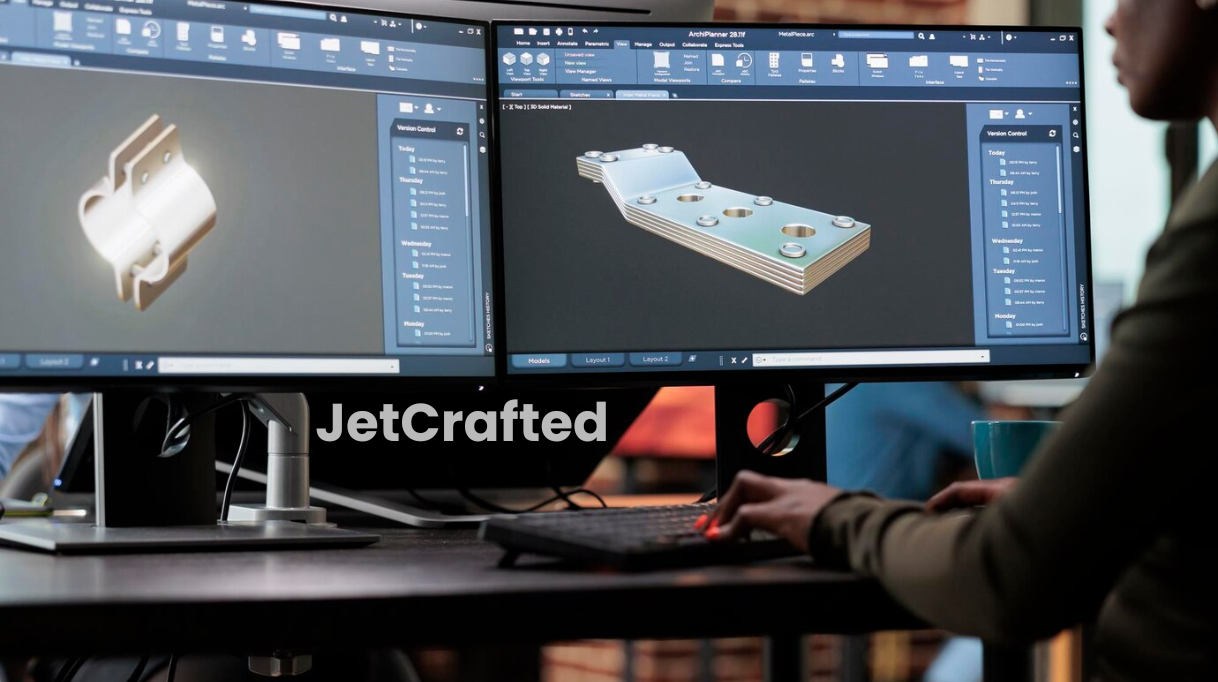
What do you do when you have an idea for a part, a machine, or other product ideas that you want to develop and place on the market or use in production? Well, the first step involves thorough testing and refinement, and you can only do that by creating a prototype quickly. And how can you do that? With rapid prototyping.
But what is rapid prototyping? Prototyping is a type of rapid application development. It allows you to create a test version or mock-up of your product to evaluate the design’s functionality and feasibility before committing to full-scale production. This approach is often used in CNC machining, where even the smallest part must be precise and functional.
Manufacturers and companies cannot afford to produce faulty products, so they rely on rapid prototyping to test multiple versions until the final product meets all requirements. Rapid prototyping allows you to improve your designs efficiently, identify potential flaws early, and attract potential investors with a tangible demonstration of your product ideas.
In this article, we’ll see how this method saves time and resources and helps you produce end products that perfectly fit your vision and market needs.
What Is Rapid Prototyping Used For
Rapid prototyping is the first step in the product development process, where conceptual ideas transform into proof of concept. Prototyping allows designers to evaluate an idea’s functionality and feasibility before committing to large-scale manufacturing. It also makes it easier to do product and user testing, allowing you to gather feedback and adjust the design early on.
Rapid prototyping helps identify design flaws and reduce the risk of potentially expensive errors. It also accelerates the development cycle so products can reach the market faster and more efficiently. Incorporating rapid prototyping into the product development lifecycle gives you the flexibility to iterate on designs based on real-world performance and user experience.
How Does Rapid Prototyping Work
Every prototype starts as an idea by a design team and somehow must end up as a fully realized and manufacturable product. That final realization happens through prototyping. The rapid prototyping steps include:
- Conceptualize and sketch the initial design
- Create a digital model using CAD software
- Design the initial prototype
- Manufacture the prototype
- Test the initial design and gather information
- Repeat the rapid prototyping steps until you get a functional product
Additive Rapid Prototyping Techniques
The most well-known method of additive prototyping is 3D printing. 3D printing is part of additive manufacturing, meaning it adds a layer of material one at a time until it creates a three-dimensional object. It’s popular for iterative rapid prototyping because it makes it quick and cost-effective to produce complex designs.
It also offers flexibility in material choices and design iterations so manufacturers can quickly test and modify prototypes. While everyone is familiar with 3D printers and knows what they can do, 3D rapid prototyping includes several techniques.
Fused Deposition Modeling (FDM)
FDM is a commonly utilized technique in additive manufacturing. This method involves heating a thermoplastic filament until it melts, then extruding it layer by layer to create the final prototype. The filament is usually made of materials like:
- ABS (Acrylonitrile Butadiene Styrene)
- PLA (Polylactic Acid)
- PETG (Polyethylene Terephthalate Glycol)
The filament goes through a heated nozzle that moves along the machine’s axes and builds the object from the bottom up. The materials are affordable, and the machinery is user-friendly, making it accessible for hobbyists and professionals.
FDM prototypes are durable and suitable for functional testing. They allow you to evaluate the performance and ergonomics of your designs before moving to mass production. The FDM process can create complex geometries and internal structures, offering significant design flexibility.
Stereolithography (SLA)
The SLA prototyping technique uses a laser to harden liquid resin into plastic. The build platform submerges in a vat of photosensitive resin, and a UV laser traces the design on the resin’s surface, causing it to solidify. After completing one layer, the platform moves down slightly so the next layer can cure on top of it.
SLA produces highly accurate and detailed prototypes, making it ideal for applications requiring fine features and smooth surface finishes. It uses various resins, including:
- Standard resins
- Tough resins
- Flexible resins
- Castable resins
Each resin type has different properties that meet specific prototyping needs. For instance, tough resins withstand mechanical stress, while flexible resins bend without breaking.
SLA offers high resolution and exceptional detail, which are preferable for detailed visual models, intricate shapes, and complex internal structures. It’s also easy to sand, polish, or paint SLA parts, making them suitable for presentation models and functional testing.
Selective Laser Sintering (SLS)
The SLS technique uses a laser to sinter a powdered material until it binds together and forms a solid structure. The process begins with spreading a thin layer of powdered material, such as nylon, polyamide, or various composites, onto the build platform. A laser then selectively fuses the powder according to the design’s cross-sectional layers. The process repeats layer by layer until you get the final product.
SLS materials are known for their mechanical properties, like high strength and durability, making them suitable for functional testing and end-use parts. The absence of support structures in SLS means you can create complex geometries and interlocking parts, which are often challenging for other manufacturing methods.
The key advantages of SLS for creating a prototype include its ability to produce prototypes that can withstand in-depth testing. SLS prototypes don’t need post-processing to remove support structures, reducing the time and effort required to finalize the product.
Subtractive Rapid Prototyping Techniques
Unlike additive manufacturing, which builds up layers, subtractive manufacturing removes layers until the final form appears. It’s usually called CNC machining and is highly popular for prototyping because it allows for greater precision and a smoother finish. It’s also handy when you need to test the functionality of a design quickly.
While there are a few differences between CNC vs rapid prototyping, in the end, you still get a functional and precise prototype. You can use several subtractive techniques for rapid prototyping.
CNC Machining
The most common subtractive method for creating prototypes is CNC machining. It removes the extra layers from a chunk of material to form the prototype. The types of materials used during CNC machining are extensive and include:
- Metals
- Plastics
- Composites
- Wood
The main reason to use CNC machining for rapid prototyping is its ability to produce accurate and repeatable results. It also allows for quick modifications to the design, which can be essential during the development phase. The high level of automation in CNC prototyping reduces the likelihood of human error, giving you more consistent quality across multiple prototypes.
Laser Cutting
A focused laser beam cuts the materials with high precision and speed during this method. Laser cutting is particularly beneficial for creating intricate patterns, detailed features, and fine cuts, making it ideal for prototypes that require a high level of detail.
The versatility in material options allows you to create prototypes for various applications, from electronics to automotive components. You can cut several materials using lasers, including:
- Stainless steel
- Aluminum
- Titanium
- Plastics
- Wood
- Ceramics
The benefits of laser cutting for rapid prototyping include its ability to produce clean cuts with minimal material wastage. This precision eliminates the need for secondary operations, saving time and resources. Laser cutting is also relatively fast and perfectly suited for iterative rapid prototyping. Because no tools touch the material during laser cutting, the risk of material deformation is minimal.
Waterjet Cutting
Waterjet cutting is a subtractive technique where a stream of water under high pressure cuts through materials. The water is usually mixed with some type of abrasive material. This method is favored for making prototypes because it cuts through many materials without generating heat, which helps preserve the material’s properties.
Waterjet cutting can handle varying thicknesses, from thin sheets to thick slabs, providing flexibility in your prototyping projects. Suitable materials for waterjet cutting include:
- Metal
- Glass
- Stone
- Composites
Waterjet cutting offers precise cuts with smooth edges, reducing the need for additional finishing processes. The cold-cutting process eliminates the risk of heat-affected zones, which can alter the material properties and affect the performance of your prototypes.
Benefits of Rapid Prototyping
Whether you’re designing new parts that fit into specific machines or entire products, you must test them out first. Churning out an entire production run of a component that turns out to be faulty is expensive, so you want to test it out before finalizing your decision. Production moves quickly, and so must you, which is why rapid prototyping is the solution. But what are the key features of rapid prototyping? Let’s take a look.
Speed and Efficiency
The first of many advantages of rapid prototyping is the significantly accelerated development process. Traditional prototyping methods often involve lengthy timelines and complex procedures, which can delay the project. With rapid prototyping, you can produce a model in a matter of hours or days, depending on the complexity.
This quick turnaround means you can iterate designs rapidly, testing and refining until you achieve the desired outcome. In many industries, rapid prototyping allows engineers to create and test new parts or modifications in a fraction of the time it used to take. The time savings realized through rapid prototyping means you can bring products to market faster, giving you a competitive edge.
Risk Reduction and Time Savings
Rapid prototyping lowers the number of design errors through repetitive testing and refinement. By creating a prototype early in the development process, you can identify potential issues and reduce the risk of committing to the full-scale production of a faulty product. The more errors you can eliminate during the prototyping stage, the more you reduce the likelihood of product recalls or failures.
Rapid prototyping also impacts project timelines by making it possible to run several parallel development processes. While the prototype undergoes testing, other project aspects like marketing or supply chain logistics can proceed simultaneously. This synchronized workflow saves time and improves overall project efficiency.
User Feedback and Validation
To develop a product successfully, you must have user and stakeholder feedback. Rapid prototyping makes it easy to present a tangible model of your design to users and stakeholders early in the development process. This can be invaluable for gathering insights and feedback you didn’t consider during the design stage.
The rapid prototyping method makes it easy to incorporate feedback and develop better design iterations quickly. The feedback allows you to adjust the prototype and produce updated versions for further testing and validation straight away so that the final product aligns with user requirements. Involving users and stakeholders in the prototyping phase can increase their buy-in and support for the project, as they can see their input is taken into account.
Form Freedom and Material Options
Rapid prototyping offers design flexibility that traditional manufacturing methods may not. This increased freedom allows you to experiment with elements that would be difficult to achieve with conventional methods.
Rapid prototyping also works with a variety of material options. Depending on the prototyping technology you choose, you can work with materials ranging from plastics and resins to metals and composites. Each material has its own properties, such as strength, flexibility, and heat resistance, which can significantly impact your design.
By testing your prototypes with different materials, you can better understand how the final product will perform under real-world conditions. Such testing can help you make more informed decisions about material selection for your final production run. The combination of form freedom and material options makes rapid prototyping a powerful tool for innovation and optimization during product development.
Applications of Rapid Prototyping
Whether you’re making automotive parts or designing tables, all successful products start with a prototype. Rapid prototyping has a place in many industries for many reasons, from prototyping tools to developing consumer products.
The process allows you to create a tangible model of your design, which you can test for functionality, fit, and appearance. You can use it to make changes and refine the final product until it’s perfect. This adaptability makes rapid prototyping indispensable in various industry sectors.
Product Design and Development
When you have an idea for a new product, creating a prototype allows you to explore its feasibility and functionality before it moves into mass production. With rapid prototyping, you can create multiple versions of your design, making necessary adjustments along the way.
The process of trial and error encourages innovation by allowing you to experiment with different materials, structures, and features. You can test each prototype to see its performance, usability, and aesthetics to make the final product functional and appealing to consumers.
Medical and Healthcare
The medical and healthcare sectors rely on rapid prototyping to produce the most accurate products. There is no compromising on precision and customization in this field, and rapid prototyping offers the flexibility to meet these demands.
For instance, prosthetics and implants require a high degree of customization to fit individual patients perfectly. Rapid prototyping enables the creation of custom-fitted devices that improve patient comfort and functionality.
Surgical tools benefit from rapid prototyping by allowing for the design and testing of new instruments that improve surgical outcomes. The ability to quickly produce and iterate on these tools means medical professionals can access the most advanced and effective equipment, ultimately enhancing patient care.
Aerospace and Automotive Industries
Rapid prototyping is invaluable for designing and testing components in the aerospace and automotive sectors. Engineers and designers use prototypes to create detailed models of parts, allowing for a thorough evaluation before moving to full-scale production.
For example, automotive companies can produce prototypes of engine components to test their performance under various conditions. This process helps identify potential issues early, saving time and resources in the development phase. Innovation in these industries often relies on the ability to iterate designs quickly. Rapid prototyping enables the creation of multiple iterations of a component, facilitating continuous improvement.
In aerospace, the technology allows for testing aerodynamic properties and structural integrity of parts, such as winglets or fuselage sections. This capability accelerates the development of safer and more efficient aircraft, demonstrating the practical benefits of rapid prototyping in these demanding industries.
Education and Research
Rapid prototyping plays a significant role in fostering innovation and practical learning in academic settings and research institutions. Universities and technical schools use prototypes as tools for design, enabling students to bring their theoretical knowledge to life. For instance, engineering students might use rapid prototyping to create models of robotic arms or other mechanical systems, providing hands-on experience that enhances their educational journey.
Research institutions also benefit from rapid prototyping, which enables the fast development and testing of experimental devices. Scientists and researchers can create prototypes of medical devices, laboratory instruments, and other specialized equipment, allowing for quick iterations and modifications.
This flexibility supports a dynamic research environment where anyone can rapidly test and refine their ideas, leading to more effective solutions and advancements in various fields. Rapid prototyping bridges the gap between conceptualization and practical application, making it a critical asset in education and research initiatives.
Get From Idea To Reality With Rapid Prototyping
Now you know the basics of what rapid prototyping is. It allows you to bring your ideas to life quickly, allowing you to test their feasibility and performance and make necessary adjustments. This method’s speed ensures that you can expedite the time to production, regardless of the number of trial runs required.
With rapid prototyping, the end product undergoes thorough testing, ensuring it is ready for immediate use. For a reliable source of high-quality prototypes with quick turnaround times, consider partnering with Jetcrafted. Our rapid prototyping service can help you turn your concept into a final product fit for the market.
FAQs
1. What is the main advantage of rapid prototyping?
Thanks to rapid prototyping, designers and engineers can create and test models of their ideas very quickly. It speeds up the development process and helps identify any issues early on. With rapid prototyping, teams can make adjustments and improvements quickly, leading to a more refined final product. This method saves time and resources, making the development cycle more efficient.
2. Is rapid prototyping suitable for mass production?
Rapid prototyping is generally not suitable for mass production. Its primary purpose is to create small quantities of prototypes to test designs and concepts. The materials and methods used in rapid prototyping are often more expensive and less durable than those used in traditional manufacturing. Therefore, while it is excellent for development and testing, other methods are better suited for producing large quantities of a product.
3. Is rapid prototyping cost-effective?
Rapid prototyping can be cost-effective, especially in the early stages of product development. It allows for quick iterations and design changes without the need for expensive tooling or setups. However, the cost-effectiveness depends on the complexity of the design and the materials used. For large-scale production, other methods might be more economical.
4. How does rapid prototyping impact product innovation?
Rapid prototyping allows design teams to test and refine their ideas quickly. This speedy process encourages experimentation and creativity, as changes can be implemented and tested in a short time frame. It reduces the risk associated with new designs and helps bring innovative products to market faster.
5. How is rapid prototyping used in product development?
Rapid prototyping can quickly create physical models of new designs. These models help teams evaluate a product’s functionality, design, and user experience. Based on feedback, they can test different materials and configurations, make adjustments, and improve the design. This iterative process helps the final product meet all requirements and perform well in real-world conditions.
6. What industries benefit most from rapid prototyping?
Several industries benefit greatly from rapid prototyping, including automotive, aerospace, consumer electronics, and medical devices. In these fields, the ability to quickly test and refine complex designs is invaluable. For example, automotive and aerospace companies use rapid prototyping to develop new parts and systems, while medical device manufacturers use it to create and test new tools and implants. This method helps these industries innovate and improve their products efficiently.