
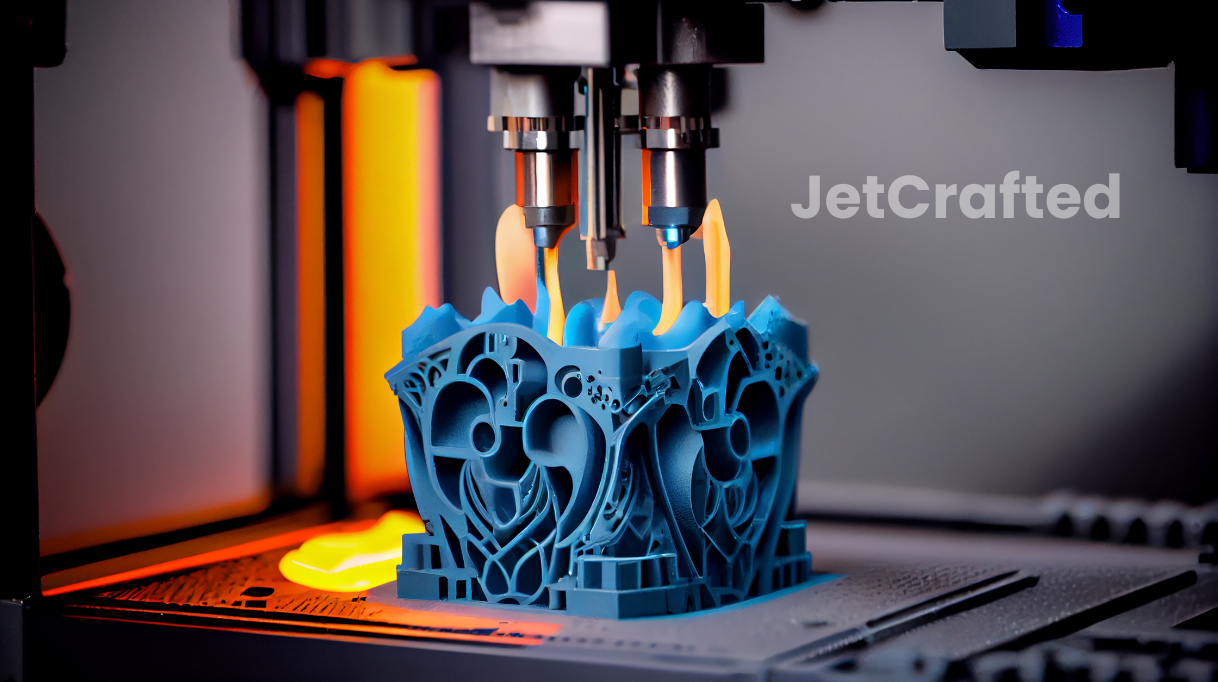
As anyone in the business can tell you, CNC machining has transformed the manufacturing industry from its core. As a manufacturer, you can take full advantage of the benefits of CNC machining and technology, so you can achieve a higher level of speed and efficiency.
The evolution from manual to computer-aided manufacturing has revolutionized how products are made. What sets CNC apart from other manufacturing processes are the precision and the ability to create intricate designs. Also, those designs can be replicated over and over again, and remain identical each time.
The purpose of this post is to go over the process of CNC machining in detail and help you understand the many benefits it can bring to your business. So, let’s get right to it!
What are the Advantages of CNC Machines?
When looking into the benefits of CNC machines, it’s essential to consider how they’ve changed the existing manufacturing methods on a larger scale. From speed and efficiency to manual labor and waste production, let’s take a closer look at how computer numerical control machining has improved manufacturing operations across the board.
High Production and Scalability
CNC machining offers you the ability to produce large quantities of parts with high efficiency. CNC machines can be adapted to different production sizes, making them ideal for both short runs and full-scale mass production.
The inclusion of an Automatic Tool Changer (ATC) drastically improved the production flow. It minimized downtime and made it possible for the machines to perform various operations without manual tool changeovers. That adds to the scalability of these machines, allowing businesses to keep up with all kinds of demands and not compromise on quality or lead times.
High Production and Scalability
CNC machining offers manufacturers the ability to produce large quantities of parts with high efficiency. They’re designed to adapt to different production sizes, making them ideal for both short runs and full-scale mass production.
The inclusion of an Automatic Tool Changer (ATC) plays a significant role in maintaining the production flow, minimizing downtime, and enabling the machine to perform various operations without manual tool changeovers. This scalability is what allows businesses to keep up with different levels of demand and not compromise on quality or lead times.
Improved Speed
Having shorter cycle times is a clear benefit of CNC machining. If you want to achieve a rapid throughput, High-Speed Machining (HSM) practices are a must, as they allow CNC machines to operate at high spindle speeds and have fast feed rates.
You can easily notice this speed advantage if you compare it to conventional manufacturing methods, which rely on manual operations and setting everything up by hand. The speed of CNC machines directly translates to increased output and faster time-to-market for new products.
Reduced Labor Costs
CNC machining is highly automated. It minimizes human intervention and reduces both the risk of error and the hours needed to correct it. The shift from labor-intensive operations to computer programming means that fewer machine operators can oversee more machines, which reduces labor costs.
And because of the long-term benefits of reduced labor, you’re allowed to invest more in innovation and development.
However, this doesn’t mean that human intervention isn’t needed anymore. It just focuses on more specialized areas such as design and quality control, which makes CNC machining a good career choice with space to advance.
Minimal Waste of Materials
With their high precision, CNC milling machines use every bit of material, leaving behind the least possible waste. This is thanks to efficient chip load management, which plots how to use the most material from a single sheet of block.
CNC machines control the amount of material removed by the cutting tool in each revolution, which is how they ensure that as much of the raw material is used in the final product as possible. This not only has economic benefits but also aligns with sustainable practices by reducing the environmental footprint of manufacturing operations.
Lower Production Costs
CNC machines are also a great way to reduce costs. The quality these machines produce constantly minimizes the need for rework and scrap, both of which can be costly. The speed of CNC machining makes it possible to produce more parts in less time. An added benefit is that this type of efficiency also lowers production costs.
That can be seen in the many case studies that show the significant cost reduction businesses can expect if they implement CNC technology. That solidifies its status as one of the most cost-effective solutions for modern manufacturing needs.
Is CNC Machining Better Than Conventional Machining?
When comparing CNC machining to conventional machining, you must know what CNC machining is at its core. CNC, or Computer Numerical Control machining uses computerized controls to handle the complex machinery needed for making components from a variety of materials.
This modern approach revolutionized traditional manual machining by introducing automation and increased efficiency. One of the main benefits of CNC machines is their precision and accuracy. CNC machining produces parts with extremely tight tolerances and maintains a very high level of consistency and repeatability.
The versatility of CNC machines also extends to the wide range of materials they can handle. From metals to composites, CNC machining can process many different materials with the same precision and accuracy, making it a valuable tool for many industries.
This adaptability and the capacity to perform many machining processes, such as drilling, milling, and turning, without the need for multiple setups or the intervention of an operator, further show the advantages of CNC machines.
The advantages of CNC machine over conventional machine are too many to go into detail for each one, so we’ve prepared a quick comparison table.
| Feature | CNC Machining | Conventional Machining | Advantages of CNC Machining |
| Process Control | Automated | Manual | More consistent results |
| Machine Operation | Computer-controlled | Operator-controlled | Less human error |
| Accuracy | High | Moderate | More precise parts |
| Repeatability | Excellent | Good | Consistent quality across production runs |
| Flexibility | High | Moderate | Can create complex parts with ease |
| Production Rate | High | Moderate | Faster production times |
| Labor Cost | Low | High | Lower labor costs |
| Setup Time | Moderate | High | Quicker setup times |
| Error Margins | Low | High | Reduces the risk of human errors and mistakes |
| Software Requirements | Yes | No | More advanced capabilities |
| Initial Investment | High | Moderate | May have a higher initial cost, but can be offset by the other advantages |
| Cost per Part | Low | High for small batches, low for large batches | Can be more cost-effective for high-volume production |
| Suitable for | Complex parts, high-volume production | Simple parts, low-volume production | A wider range of applications |
Why is CNC Machining Necessary
CNC machining is also vital in modern design for manufacturability (DFM). Thanks to the use of CAD and CAM software CNC machines can quickly turn complex designs into precise physical parts.
It’s that cooperation between the design and manufacturing stages that streamlines the production process. It opens up new possibilities for innovation and developing even more customized products.
The precision of CNC machines ensures that material is removed only where necessary, minimizing excess and contributing to more sustainable manufacturing practices.
Additionally, the automated tool changes and advanced cutting techniques available with CNC technology further improve the machining process. They increase the overall efficiency and cost-effectiveness of the production process.
What are the Disadvantages of CNC Machining?
While the many CNC machining benefits, like high precision, speed, process optimization, and repeatability, cannot be denied, it’s important to look at both sides. It’s also important to consider the disadvantages of CNC machine before investing.
Some notable drawbacks include:
- Substantial Initial Cost of Investment: Acquiring a state-of-the-art machining tool, along with the necessary computer systems and software, requires significant capital. If you’re a small business or a startup, this can definitely be a barrier.
- CNC Machines can be Complicated to Set Up: Settling up one of these machines involves careful planning and installation to ensure it operates to its full potential. The process takes time and requires technical expertise, which can add to the upfront expenses.
- Steep Learning Curve: Mastering the intricacies of computer-aided design (CAD) and computer-aided manufacturing (CAM) software and understanding the G code necessary to control the CNC machine is no easy task. If you want to take advantage of the full capabilities of CNC technology, you need skilled operators and programmers. This means that training or hiring experienced personnel becomes another factor to consider.
- Higher Energy Consumption: CNC machines can consume a significant amount of energy, especially large machines or machines that are set to run without stopping. This can be a concern for businesses looking to go green by reducing their environmental impact.
- Costs of Maintenance and Repairs: These machines require regular maintenance to ensure optimal performance and prevent breakdowns. CNC machine repair can be expensive, especially if they require specialized technicians or replacement parts.
- Limited Design Flexibility in Certain Areas: While CNC machining offers a high degree of design flexibility, there are still areas where it may be limited. For example, creating parts with sharp internal corners or very thin walls may be difficult or impossible. Even 3D printing can struggle with creating odd shapes and very sharp corners.
Final Thought on The Benefits of CNC Machining
We cannot overstate the impact CNC machining has had on the manufacturing industry. The benefits of CNC machining, such as speed, precision, and efficiency, cannot be matched by any other technology.
Even when you weigh the pros and cons of CNC machining, the advantages, like the ability to produce complex geometries with high repeatability and the reduction in labor and material costs, always win out in the end.
That’s why we encourage other manufacturers and smaller shop businesses to embrace CNC technology and always have a head start in this competitive market. By using the capabilities of CNC machines to their advantage, businesses can achieve a level of craftsmanship and efficiency that can’t be matched with manual processes.
FAQs
1. What is CNC machining, and what makes it different from conventional machining?
CNC machining involves employing computerized controls for operating complex machinery in part fabrication. It’s different from conventional machining because it offers greater precision, consistency, and automation.
2. How does CNC machining contribute to sustainability in manufacturing?
CNC machining enhances sustainability by minimizing material waste and optimizing resource usage. Its precision ensures only necessary material is removed, contributing to more sustainable manufacturing practices and aligning with eco-friendly goals
3. What skills are necessary to operate CNC machinery?
Operating CNC machinery requires understanding computer-aided design (CAD) and manufacturing (CAM) software, knowledge of G-code, and technical expertise in machine setup and operation. A skilled operator knows how to make the best of a CNC machine’s capabilities.