
The need for advanced machining techniques develops along with the evolution of the manufacturing industry. One such technique that has become increasingly popular among manufacturers in recent years is CNC grinding. If you face challenges in producing high-quality parts efficiently and cost-effectively, then turning towards this technology should be high on your priority list.
In this article, we will take you on a journey to answer what is CNC grinding by decoding all the secrets of the process. The aim is to provide you with a deep understanding and practical knowledge of every crucial aspect of this advanced machining technique, from roots and costs to industry applications and the different types of grinding CNC can offer.
What is CNC Grinding Understanding the Basics of CNC Grinding
Computer Numerical Control grinding (CNC grinding) falls in the category of machining processes that rely on computerized controls to remove materials from the workpieces. By using specialized grinding machines and tools, CNC grinders offer unparalleled accuracy and notably increased efficiency compared to manual methods.
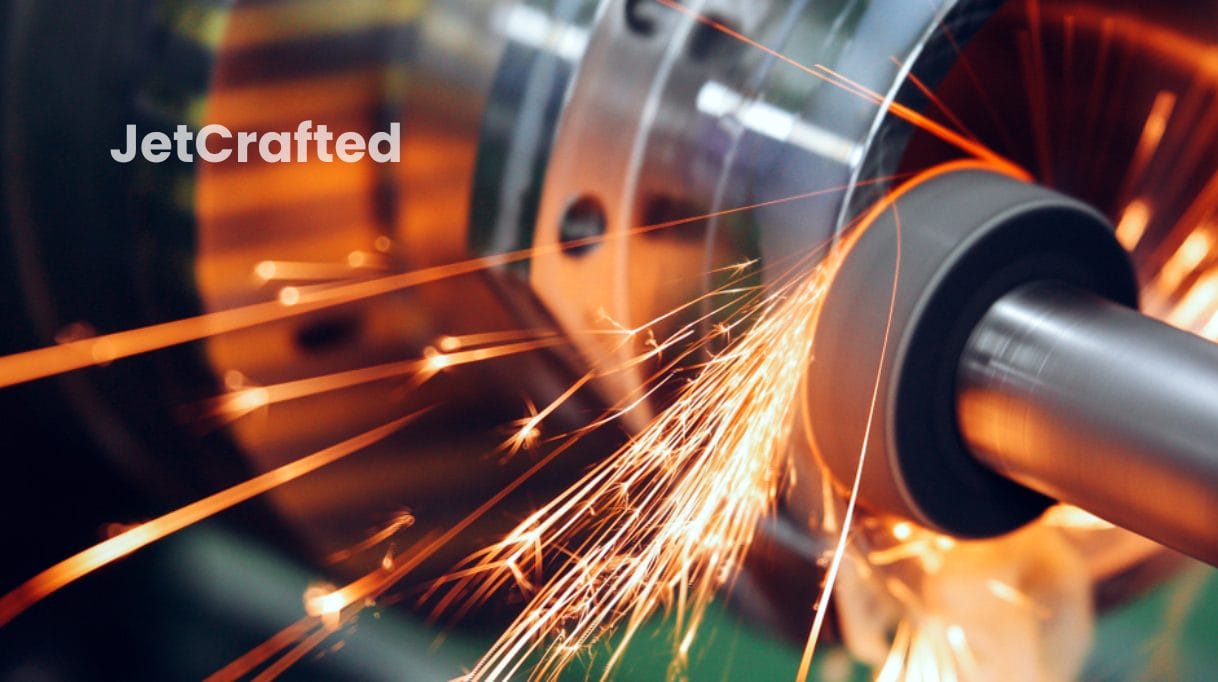
The process of CNC grinding itself revolves around the efficient use of a grinding wheel rotating at high speeds, aiming to remove material from a workpiece. Computer software is in charge of the grinding wheel, providing precise and consistent grinding results. It has the ability to precisely and swiftly control factors such as speed, cut depth, and feed rate.
From a mechanical standpoint, the process involves the removal of small amounts of material, using a rotating grinding wheel as the cutting tool, from the surface of certain products. The special grinding wheel attaches to the machine table and moves along the X-, Y-, and Z-axes while grinding the material.
Advantages of CNC Grinding over Traditional Grinding Techniques
If you are thinking about grinding using a manual or automated method, consider the advantages of CNC grinding before making a decision. Several key benefits make CNC grinding the superior option over traditional grinding techniques:
- Higher levels of precision: One of the main advantages of CNC grinders is the ability to achieve extreme levels of accuracy. The computerized controls of CNC grinding machines translate to consistent and repeatable results by eliminating human error and reducing scrap rates.
- Improved control: Complete control of grinding parameters allows for the optimization of the rate of material removal, thus reducing cycle times and lower production costs.
- Wide range of materials: Whether metals, ceramics, or composites, CNC grinding can effectively take on any material and grind to the desired specifications.
- Large quantity production: CNC grinding machines are capable of handling any size and quantity of parts. This allows you to meet the demands of personal and client production easily.
- Continuous production for longer hours: CNC grinders can operate 24/7, 365 days a year, without interruptions. Once set up, they only require minimal downtime intended to provide a window for routine maintenance.
- Highly identical production: Using CNC grinders ensures the production of highly uniform products in quantities of any scale. This is particularly useful when bulk production of a specific part is required.
Different Types of CNC Grinding Machines
There are various types of CNC grinding machines available on the market, providing even more diversity in the grinding methodology. Each type is designed to cater to specific grinding needs, aligned with the goals of different industries. Depending on the grinding processes, several main categories of CNC grinding machines can help you achieve a specific task:
- Surface grinders: Surface grinding involves the use of a grinding wheel that rotates around a spindle, while the workpiece, mounted on a reciprocating or rotary table, comes into contact with the wheel.
- Cylindrical grinders: Primed for use on cylindrical surfaces, these employ a rotating wheel that grinds a workpiece that is mounted between centers or latched in a chuck. Cylindrical grinding is commonly used in the production of roller bearings to achieve the required size and surface finish.
- Centerless grinders: A centerless grinder is unique, not bound by the requirement to hold the workpiece in the center. Instead, it is supported by a work-rest blade and driven by a regulating wheel.
- Internal grinders: Internal grinding is a complex grinding technique, mostly reserved for grinding bores and holes. This type of CNC grinder machine uses two grinding wheels to ensure extreme accuracy and rapid completion.
How CNC Grinding Machines Work
If you’re to understand a CNC grinder, you need to comprehend the nuts and bolts of the CNC machine grinding process, which is only possible due to the use of specific components. Each type of CNC grinding machine consists of the same fundamental parts:
- Grinding wheel – The main component tasked with removing material from the workpiece. Understanding what is abrasive cutting and grinding begins by understanding the abrasive particles-covered grinding wheel. These wheels come in different sizes and shapes.
- Workpiece holder – Designed to keep the workpiece within reach of the wheel at all times, holders align with the type of CNC grinder as determined by the project’s needs.
- Computerized control system – is at the center of a CNC grinding machine, responsible for supervising various parameters like the wheel’s speed, cut depth, feed rate, and coolant flow.
- Auxiliary components – A wide range of auxiliary components are available for different CNC grinders. The selection depends on the project’s requirements and the specific precision parameters.
Applications of CNC Grinding in Various Industries
Various industries find a practical application of the CNC grinding process in some aspect the business. A few of these industries include:
- Automotive industry: CNC grinding is used to produce precision components such as camshafts, crankshafts, and gears.
- Medical industry: Specific industry essentials like surgical instruments, dental tools, and implants are well within the scope of CNC machining’s exceptional precision and accuracy.
- Aerospace industry: This industry relies almost extensively on CNC grinding for the manufacturing of critical aircraft components like turbine blades and fuel nozzles.
- Tool and die industry: Another industry highly reliant on CNC grinding for the constant production of molds, dies, and a variety of specific tools.
Choosing the Right CNC Grinding Machine for Your Needs
When it comes to choosing the right CNC grinding machine for your needs, you need to consider a few crucial aspects.
First, you need to identify the specific grinding requirements of your application. This includes factors such as the type of material, the desired surface quality, and the dimensional accuracy required.
Once you know your exact grinding requirements, you can research and pick from the various CNC grinding machines available. Factors such as machine size, spindle speed, grinding wheel capacity, and the system’s automation capabilities are crucial in making an informed decision.
The after-sales support provided by the machine manufacturer also plays a role in CNC grinder selection. Most manufacturers offer comprehensive training programs, rapid technical support, and immediate availability of spare parts. These are the ones you should be interested in.
What is CNC OD Grinding?
CNC OD grinding, referring to the Outside Diameter of CNC grinding, is a specific type of CNC process that focuses on the outer surfaces of mainly cylindrical workpieces. The key characteristics of this technology are high tolerances and precise dimensions on cylindrical parts.
Regarding the difference between CNC OD grinding and other types of CNC grinding, OD CNC uses a set of highly specialized grinding wheels. They can grind the outer diameter of the workpiece with precision and accuracy. Using the dedicated software to keep factors such as wheel speed, depth of cut, and feed rate under your direct control, these machines can help you manufacture cylindrical parts with exceptional surface finish and dimensional accuracy.
CNC Machining vs. CNC Grinding
In order to better understand what is CNC grinding, we also need to consider other aspects of CNC machining in general. While sounding similar, CNC grinding is not the same as CNC machining, but rather a distinct machining technique of its own.
CNC machining is a process that extends beyond just removing material from a workpiece and also uses the power of the software controlling it to create the desired shapes or forms. CNC machining utilizes various cutting tools to remove material through cutting, drilling, milling, or turning.
If precision is your main goal, looking into CNC honing, the most precise of all CNC machining methods, is your best bet. Working in combination with CNC grinding, it enables the creation of complex shapes and forms that may not be possible with CNC grinding alone.
Training and Education
To ensure the successful operation of CNC grinding machines, proper training and education for those operating them is crucial to success. As an operator, you must be skilled in all fundamental aspects of CNC grinding, from initial machine setup to programming techniques.
Training programs cover topics such as machine safety, proper use of grinding wheels, and dealing with common issues that might arise. In addition, you will need to familiarize yourself with the specifics of a certain grinder by going through hands-on training to understand how the machine operates.
Continuous education and training will keep you educated, providing updates about the latest advancements in CNC grinding technology. Usually, this includes visiting workshops, attending seminars, and obtaining industry certifications.
Common CNC Grinding Challenges
While CNC grinding offers plenty of benefits over manual methods, it is not without its challenges. The most common challenge you will likely face when operating one is wheel wear. The grinding wheels gradually wear down over time due to constant friction, leading to a decrease in grinding performance. This issue is easy to remedy with a regular monitoring routine, replacing grinding wheels immediately when performance drops.
Another common challenge is thermal damage. CNC machines generate a lot of heat during the grinding process, which forms Heat Affected Zones (HAZs) that damage the workpiece material. The damage appears as distortions in the material, changing its properties and leading to dimensional inaccuracies. Selecting the optimal coolant and diligently controlling the grinding parameters can easily mitigate this issue.
Moreover, machine malfunctions, usually in the form of axis misalignment or spindle vibration, can also affect the accuracy and surface finish of the grinding process. Regular maintenance and inspection of CNC grinding machines is once again the solution.
Conclusion
CNC grinding is a highly advanced machining technique that offers high precision, accuracy, and efficiency. In the quest for the optimal grinding method, turning to CNC grinding machines allows for a level of control that no manual counterpart can achieve.
That said, you need to figure out how the process works, what components define the different types of CNC machines, and where each machine finds the best practical application. Only when you completely understand what is CNC grinding can you move on to the selection process and enroll in an adequate training program to gain the required operating skills.
With technology on the rise each day, the future of CNC grinding looks promising. Trends such as AI integration and robotic automation offer perspectives in the technology that we couldn’t even conceive a decade ago.
FAQs
1. Is CNC Grinding cost-effective?
While the initial investment can be high, CNC grinding turns into a cost-effective method in the long run as a direct result of its efficiency and lower labor costs.
2. Can CNC Grinding machines work with CAD/CAM software?
Yes, CNC grinding machines are designed for complete integration with CAD/CAM software, allowing for fully automated, precise machining work fed by digital designs.
3. Can CNC Grinding be used for hard materials?
Absolutely. CNC grinding is one of the go-to methods for grinding hard materials that are difficult to process with other techniques.