
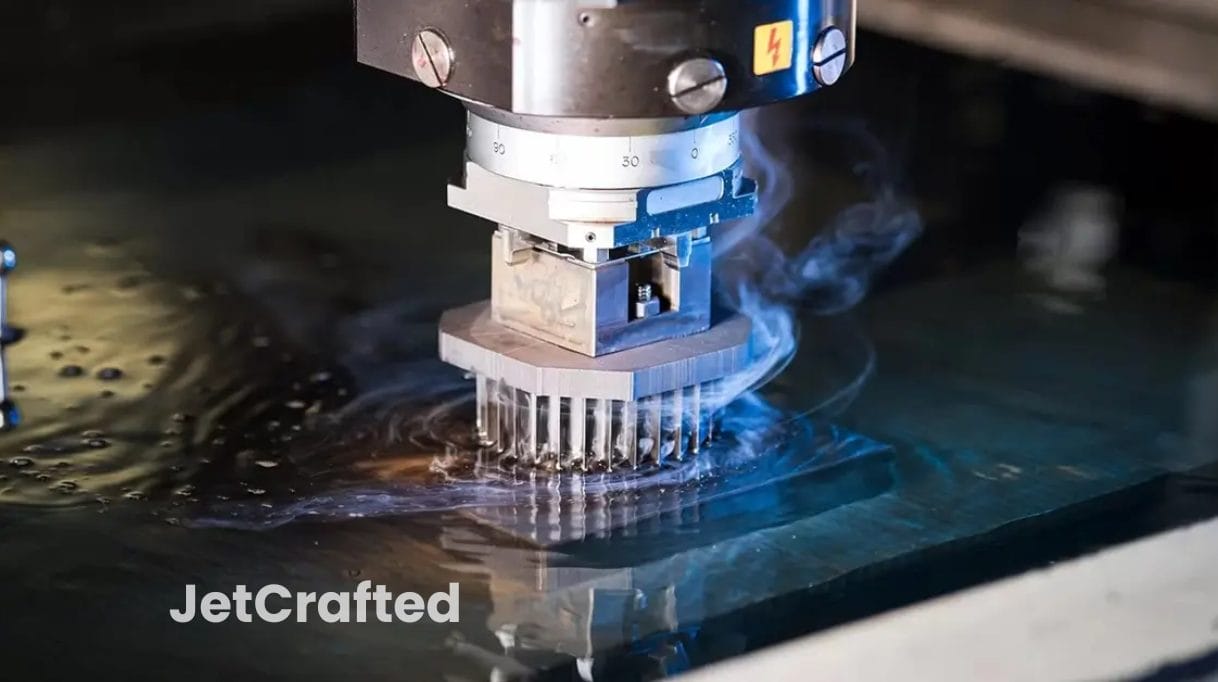
Electric discharge machining (EDM), is a highly reliable cutting methodology that has been around for a long time. It is often referred to as “spark” machining and has a wide range of different industry applications that require parts with precisely made slots, grooves, cut-offs, and eyelets in all kinds of parts.
If you are considering giving electrical discharge machining a try, then this guide is going to take you through the key aspects by exploring the electric discharge machining advantages and disadvantages. We will also touch on how you can use wire EDM machines in practice in different sectors.
Understanding the Inner Workings of EDM
To better understand the electric discharge machining advantages and disadvantages, we’ll start with the basic concept first. That is, what is electric discharge machining.
In a nutshell, electrical machining is a process that relies on electrical discharges to shape workpieces. It involves passing an electrical current between an electrode and a workpiece. Both of them are separated by a dielectric liquid which is the crucial insulator that makes the entire process possible and safe.
Once sufficient voltage enters the system, electrically conductive materials (dielectric fluid) ionize, gaining electrical conductivity properties as they turn from an isolator to an electrical conductor. The result appears as spark discharges that erode the workpiece, which affects its structural integrity and allows you to shape it into the finished product you are after.
There are three types of electrical discharge machining processes that make up EDM: Sinker EDM (RAM), Wire EDM (Cheese Cutter), and Hole Drilling EDM (Hole Popper). Each offers various solutions for machining applications that require a high level of accuracy. These processes are particularly valuable when more conventional are ineffective, difficult, or impossible.
Sinker EDM: Sinker EDM is ideal for complex projects that involve intricate shapes. The process creates a negative replica of the workpiece by using pre-machined electrodes that offer very high precision. Sinker EDM excels in producing intricate and detailed parts while maintaining high-level accuracy.
Wire EDM: This sub-process employs a thin wire, usually made from copper or brass, which is directed by diamond guides, offering precise cuts around the workpiece. Wire EDM is highly regarded for its ability to create intricate and delicate shapes with exceptional precision. It is beneficial for working on parts with tight tolerances and complex geometries.
Hole Drilling EDM: Hole Drilling EDM is the method of choice for small hole drilling in sizes that no other conventional machining method can achieve. It utilizes a tubular electrode nozzle, allowing the dielectric fluid to flow through it and erode the workpiece.
Advantages of Electric Discharge Machining
Electric discharge machining clearly possesses some crucial properties that make it invaluable in certain manufacturing scenarios. Let’s explore some of the most important advantages of electric discharge machining:
- Machining Specific Materials– One of the most notable advantages of EDM is the option to work on harder metals with ease. Traditional machining techniques may struggle to effectively shape specific materials like tungsten carbide or even titanium. EDM excels in machining these challenging materials, providing a solution for industries that require precise shaping of hard metals.
- Exceptional Precision – The EDM process allows for the creation of highly accurate outlines on different workpieces. Moreover, the workpieces do not require additional edge-cleaning or deburring after the initial process is complete. The electrical discharges erode the material precisely, creating a final product that easily meets even the most rigorous specifications.
- Low Residual Stresses – Unlike conventional machining methods, EDM does not generate high cutting forces during the process. As a result, it creates minimal residual stresses on the workpiece which is ultra useful when handling delicate or fine metals that tend to distort or wrap.
- Versatility in Complex Geometries – EDM also offers exceptional versatility in terms of machining complex geometries. Its ability to produce intricate shapes, deep cavities, and fine details that cannot be achieved with traditional machining methods. Such flexibility enables unique opportunities for the design and engineering of innovative and intricate components.
- No Contact And Tool Wear – A standout feature of using EDM is the clear lack of physical contact between the electrode and the workpiece. This absence of direct tool-to-workpiece contact means that there is also minimal wear on the tools. As a result, the electrodes used in EDM can maintain their shape and effectiveness for longer, removing the need for replacements or servicing.
Disadvantages of Electrical Discharge Machining
While electric discharge machining offers numerous advantages, it also has certain limitations that should be taken into consideration. Here are some of the key drawbacks:
- Slower Machining Process – One of the main disadvantages of EDM is its relatively slow machining process. Compared to conventional machining methods, EDM demands more time and effort, which only increases as the size of the project does. The slow speed can be a significant drawback when efficiency and productivity are of the essence during a manufacturing process.
- Energy Consumption – In the current era of increased environmental consciousness, energy consumption is an important factor in all manufacturing processes. EDM is a method that utilizes more electrical energy than many other mechanical machining processes. This, in turn, makes it less favorable if you’re seeking to reduce their carbon footprint and prioritize low-energy consumption methods.
- Limited to Smaller-Scale Projects – EDM is best suited for smaller-scale projects that require precision and intricate detailing. While it is unparalleled in creating complex shapes and fine details, it is not the best option if you are involved in a large-scale manufacturing process.
- Cost Considerations – EDM can be a costly machining process, particularly when compared to more traditional methods such as milling or turning. The equipment and tooling are also expensive, and the slower machining speed can result in longer production times which ultimately lead to higher costs. You have to carefully consider the electrical discharge machining cost-benefit ratio before deciding to utilize EDM for your manufacturing needs.
Do the Pros Outweigh the Cons?
As you can see from the table below, the advantages of electrical machining not only outweigh the drawbacks in number but also in the quality of the machining process. Here are a few highlights of the electric discharge machining advantages and disadvantages.
| Pros | Cons |
| Machining Specific Materials | Slower Machining Process |
| Exceptional Precision | Energy Consumption |
| Low Residual Stresses | Limited to Smaller-Scale Projects |
| Versatility in Complex Geometries | Cost Considerations |
| No Contact And Tool Wear |
Practical Applications of Electric Discharge Machining
While EDM does have certain drawbacks, it is still one of the most valuable machining tools in specific industries. Some of the most practical applications of electrical discharge machining include:
- Aerospace and Automotive Industries: EDM plays a crucial role in the development of small and intricate components in these two giant industries. From the production of engine parts to specialized components, EDM enables the production of high-precision and advanced components that have to meet very stringent industry standards. EDM’s exceptional precision and intricate detailing capabilities make it the ideal choice.
- Medical Technology: Precision and accuracy are paramount in the medical technology industry. When intricate shapes are in demand, EDM is the method of choice given the precise tolerances associated with it. From surgical instruments to implantable medical devices, EDM ensures the utmost precision as well as the exceptional quality of critical medical components.
- Mold-Making Industry: EDM is also widely utilized in the mold-making industry. The ability to create complex shapes and intricate details makes EDM an excellent choice for producing molds used in various manufacturing processes. Since the method is highly precise, the resulting molds are super accurate and easily meet the specifications required for producing high-quality parts.
- Custom Manufacturing: EDM’s versatility in machining complex geometries makes it a valuable tool for custom manufacturing. From one-off parts to limited-volume production batches, EDM allows for the creation of highly customized components that require an intense degree of precision.
Conclusion
Wrapping up, there is a range of electric discharge machining advantages and disadvantages that must be carefully considered. While EDM does excel in precision, versatility, and machining hard materials, it does so at a slower speed, with more energy consumption, and limited scalability.
However, by understanding the advantages of electric discharge machining, you can make informed decisions about incorporating this technology into your production processes and projects. Electric discharge machining has a pivotal role to play in all kinds of different industries, such as aerospace, automotive, medical, or custom manufacturing. As technology evolves, EDM is undoubtedly only going to get more and more efficient and reliable.
Conversely, understanding its drawbacks will give you insight into machining speed, costs, and necessary project application.
FAQs
1. Does EDM cause structural damage to the material?
No, electrical discharge machining should not cause structural damage when properly set up and controlled.
2. What is the surface finish like after EDM?
The surface finish after EDM is exceptional, often eliminating the need for post-processing as a result of the material removal rate involved in the process.
3. What are the safety considerations with EDM?
Proper handling and disposal of the dielectric fluid and metal particles are the only important safety considerations associated with EDM.