
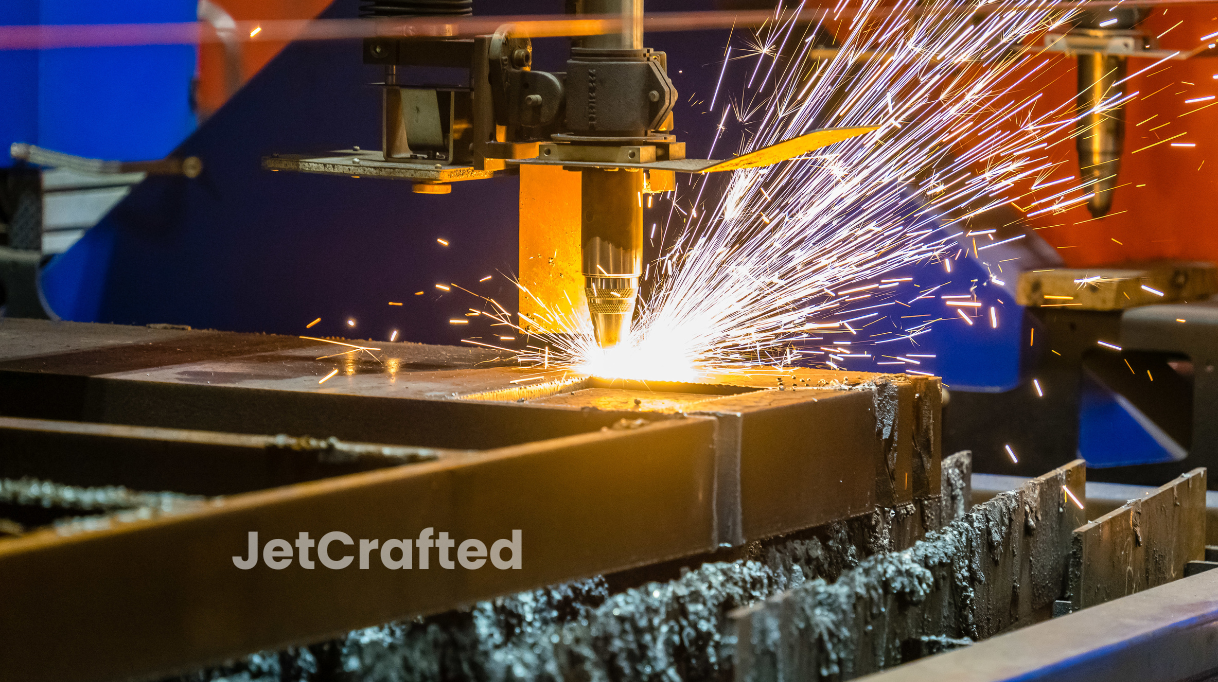
There’s no denying that the introduction of CNC machines in the production process completely re-defined the manufacturing industry. It made it faster, more precise, and ultimately more profitable. But what is a CNC machine, and why is it so important in modern production?
At its core, a CNC machine is an automated and exact tool controlled by a computer, which reads and interprets a set of instructions and then cuts out the desired component.
Today’s manufacturing process can take full advantage of the versatility of CNC machines, producing designs that would be nearly impossible to produce by hand.
This post will teach you the ins and outs of a CNC machine. We’ll cover each machine part and its function, design considerations, and machining processes that contribute to the efficacy of these tools. So, if you can’t wait to learn more about these intricate machines and what makes them tick, keep reading.
What is a CNC Machine?
Now, let’s see exactly what CNC machinery is and its function. A CNC machine is a highly automated piece of equipment that can turn digital blueprints and designs into manufactured products with precision.
A computer tells the CNC machines what to do, which then guides the cutting tools and other instruments to shape, cut, and produce parts from various materials ranging from metal to plastics.
There are many components at the center of operations of any CNC machinery. These include a controller that interprets G-code instructions and controls the movement of the cutting tool, a spindle that holds the cutting tools, and a table where the workpiece is placed.
Axes, on the other hand, typically labeled X, Y, and Z, control the direction and depth of the tool’s movement. The result? A system that can perform complex machining tasks with almost no human intervention. Advanced features like Automatic Tool Changers (ATCs) speed up the process by seamlessly switching between tools, increasing the speed and efficiency, which is key for mass production.
Nowadays, many industries, such as aerospace, automotive, and healthcare, all need very precise and complex parts. Ones that would be next to impossible to produce without CNC machines.
They can produce items with tight tolerances so that when it’s time to assemble them, the components fit together perfectly. After all, you can’t afford to build an airplane that rattles when it’s in the air.
History of CNC Machines
The gradual switch from manual machining to the sophisticated computer numerical control CNC systems we see today began in the mid-20th century. It was started by the aviation industry because it needed more complex and precise components than were available at the time.
The early prototypes of modern CNC machines were based on existing equipment, such as punch-card-controlled machines, which provided the basic framework for machine control. These early machines lacked the versatility and accuracy that was needed, so they were given an upgrade.
When computers were introduced into the process, more complex and detailed instructions could be given to the machinery, which completely changed the way manufacturers thought about the machining process.
As microprocessors became more powerful and affordable, CNC machines became more capable and more accessible. And in just a short amount of time, they could perform more complicated and precise operations across multiple axes.
Modern CNC machines now incorporate advanced computer software and sensors, allowing for higher levels of precision and machine control. They cannot be replaced in industries where consistency, repeatability, and accuracy are a priority. The ability to quickly and accurately produce parts with complex geometries has set new industry standards and has become indispensable in fields such as aerospace, automotive, and medical device manufacturing.
Thanks to modern CNC machines, engineers and machinists can not only create elaborate designs but make them a reality as well. That is something that manual machining cannot do. These machines have not only revolutionized the machine process but have also opened up new possibilities in design and innovation.
They’ve been pushing the boundaries of what’s achievable in manufacturing from day one. Fast forward to today, and we have advanced, multi-axis CNC machines that can produce parts quickly and accurately.
What is Computer Numerical Control (CNC)?
At its core, CNC is a machine control method that allows for the automated operation of CNC machine tools and systems. Unlike conventional machining, where direct human intervention is a must and, sadly, prone to errors, CNC machines are commanded by software that guarantees high precision and repeatability. This technology uses programmed instructions to control the movement and operation of machinery, making sure that CNC stays a part of advanced manufacturing.
Modern CNC machines interpret design data and carry out machine processes such as cutting, milling, drilling, and turning. That is how the industry can streamline production, but also create parts with many complex geometries.
Software is also a big part of CNC machining. In this case, we’re talking about computer aided design CAD software and computer aided manufacturing CAM software. Both are used to design parts and convert them into a language CNC machines understand – usually G-code. That language gives very detailed instructions for every movement and operation of the machine, ensuring that each action is carried out precisely.
Modern CNC machines are the pinnacle of computer-aided machining and automation. They often feature tools like the Automatic Tool Changer (ATC), which increases the speed and efficiency even more, by swapping out tools without human intervention.
The use of various axes of movement, typically X, Y, and Z, allows the machine to maneuver the tool or workpiece along different planes with great accuracy. Additionally, advancements in technology have led to the development of sophisticated machineries, such as 5-axis CNC machines. Believe it or not, these machines can perform even more complex operations and significantly expand the capabilities of CNC.
Main Parts or Elements of CNC Machine Systems
It’s not enough to know the definition of a CNC machine. You must also know each of its systems and operational CNC parts, what function they serve, and how they work together to produce the final product. The components may differ depending on the machine’s primary purpose. However, the majority have the same essential systems and elements.
Control system
The control system of a CNC machine is the brain behind the operation. This is where the so-called magic of turning digital designs into physical parts happens. It consists of several key CNC components, each vital in ensuring the machine functions correctly.
| Element | Operational Role |
| Input Device | This is the medium through which the CNC machine receives instructions. Typically, you’ll input data using a computer that’s been pre programmed with the necessary design specifications. Input devices for CNC machines can range from simple, direct control panels with buttons and levers to more complex computer systems that allow for detailed programming. Modern CNC machines often rely on advanced software that enables operators to simulate designs and tool paths before any actual cutting occurs, reducing the risk of errors and material waste. The input device also allows for adjustments to be made in real-time, providing flexibility and control during the manufacturing process. Moreover, wireless connectivity and remote input options are becoming increasingly common, enhancing the ease of use and allowing for seamless integration into smart factory environments. This integration is pivotal for industries aiming to implement Industry 4.0 standards. |
| Machine Control Unit (MCU) | An element that’s used to process the received input data, converting it into electronic signals that control the movement and operation of the machine’s mechanical components. This unit interprets the G-code and activates the corresponding machine actions needed to fabricate the part. Thanks to its advanced circuitry and software algorithms, the MCU interprets complex instructions and turns them into the machine’s toolpaths. It monitors the status of each component, ensuring synchronization and efficiency during the manufacturing process. As technological advancements continue, the MCU’s role becomes increasingly critical, integrating with sensors and adaptive systems to optimize production and enhance accuracy. |
| Display Unit | A visual interface where the operator can monitor and control the machining process. It shows the path that the machine’s tools will follow and the current status of the machining operation, and it allows the operator to make adjustments as needed to ensure the process runs smoothly. The unit typically features a high-resolution screen that renders detailed graphics and data readouts. It also may offer touchscreen functionality or be equipped with buttons and knobs for manual input. It can display error messages and system alerts, facilitating quick troubleshooting and reducing downtime. Advanced units may include features such as 3D simulations of the machining process, real-time diagnostics, and connectivity options for network communication and data transfer. |
| Control Panel | This panel houses the buttons, switches, and controls that the operator uses to control the machine manually. It provides a way to start, stop, or pause the machining process, and it’s also used for troubleshooting and making fine adjustments to the machine’s settings. It often includes an emergency stop button for safety, as well as digital displays, indicator lights, and calibration tools. It serves as the human-machine interface, allowing for precise input and real-time monitoring of the system’s performance. Additionally, the panel can store custom settings for specific tasks, streamlining the setup process for recurring jobs. |
Mechanical System
The CNC machine can’t function properly unless it has every mechanical component. The quality and integration of those parts can affect the machine’s precision, speed, and versatility. It has several components which control a separate mechanical function of the machine.
- Machine Bed: This serves as the primary base for the CNC machine, providing a firm foundation for the entire assembly. It supports all other parts and makes sure the machine is stable during the production process. The bed must be rigid and vibration-resistant to maintain accuracy. It’s typically constructed from high-strength materials such as cast iron or steel, which help to absorb vibrations and reduce thermal expansion.
- Headstock: This element holds the machine’s main spindle. It securely anchors and aligns the workpiece for various operations such as cutting, drilling, or milling. It has to be stable, as any deviation can lead to errors that affect the integrity of the final product. The more robust the headstock is, the greater the accuracy of the CNC machine stays over extended periods of use, which is why it’s often made of cast iron or steel.
- Tailstock: It’s frequently used in combination with the headstock to support elongated workpieces during various turning processes. It helps keep the workpiece stable while it rotates, and prevents any unwanted flexing or bending that could mean the cut isn’t as precise as it needs to be. The tailstock can be easily repositioned along the lathe bed, allowing it to adjust and secure different lengths of material firmly in place.
- Machine Body: This means the overall structural component of the CNC machine. It’s the place to house all the moving parts and the electronic systems that control them. It must be durable to withstand daily operation stresses and still keep all moving parts perfectly aligned. It’s typically made from high-grade steel or cast iron, so it can resist vibration and thermal expansion to ensure precision. Its robustness directly impacts the machine’s longevity and accuracy.
- Spindle: The spindle has a motor that helps it move and gives it the speed and torque necessary for cutting different materials and executing various machining processes. Advanced spindles can adjust their speed dynamically, adapting to changes in material hardness, tool wear, and cutting depth. The rigidity of the spindle assembly affects the tool’s ability to resist deflection and vibration, which can compromise the machining operation’s quality and reduce the cutting tools’ lifespan.
- Automatic Tool Changer: A device that allows the machine to rapidly and precisely interchange tool bits. That cuts down on idle time between operations and increases the overall production speed. When it has an ATC attached, the CNC machine can perform multiple machining tasks without manual intervention. That streamlines the workflow and allows more complex designs to be produced without any issues.
- Drive System: It includes motors and actuators that take the electronic signals from the CNC controller and convert them into the movements of the machine’s components. These systems move the tools along the machine’s axes and accurately position the cutting tool on the workpiece. They often have stepper or servo motors that provide motion control with high precision.
- Axes of Movement: Typically labeled as X, Y, and Z, these axes of movement are the direction in which the machine parts can move. The X-axis generally represents horizontal movement, the Y-axis vertical, and the Z-axis depth or height. Moving its tools along these axes is how a CNC machine can create such intricate and complex geometries without missing a beat.
Additional Systems
So, what is the secret behind CNC machines? What makes it possible for them to operate with precision, efficiency, and longevity? That would be the auxiliary systems. But the below-listed ones also play critical roles in the functionality and maintenance of CNC equipment.
- Coolant System: It circulates a liquid, typically a mixture of water and oil, across the workpiece and cutting tool during the machining process. The main goal of this system is to control the heat generated by the intense friction between the cutting tool and the machined material and not let it go over a certain degree. By doing so, it prevents damage to both the tool and the workpiece, ensuring that the final product meets the required tolerances and surface finish. The coolant also helps to flush away chips and debris from the cutting area.
- Lubrication System: Reduces the wear and tear on the machine’s moving parts. In CNC machining, the constant motion of components such as ball screws and linear guides can lead to friction which can damage the tools. By applying lubricant to these critical areas, the system ensures smooth operation, preserves the integrity of the machine’s components, and extends the overall lifespan of the equipment.
- Feedback System: This system is always monitoring the position and speed of the machine’s moving parts. It also relays this information back to the CNC controller. If there’s any deviation from the programmed toolpath or unexpected conditions are detected, the feedback system allows the controller to make real-time adjustments.
How Does a CNC Machine Work?
Now that we have a clear picture of the components of a CNC machine let’s learn step-by-step about how it actually works. The process begins with a design, typically created in CAD software. This design is then translated into manufacturing directives through CAM software, which generates the G-code that controls the movements and actions of the CNC machine.
As for the CNC operation, it dictates every aspect of the machining process, from the position and speed of the machine’s axes to the control of the spindle and coolant. The G-code ensures that the CNC machine operates in a way that’s needed for the task at hand. That is how it contributes to the increased production capabilities of these machines.
After the programming is complete, the machine setup begins. This includes securing the workpiece, often with the help of fixtures or jigs, to maintain a precise position – selecting the appropriate CNC tools and loading them into the machine’s Automatic Tool Changer (ATC). The ATC is no less important. It allows for rapid and accurate tool changes, minimizing downtime and maximizing productivity.
The operation of a CNC machine involves the coordinated movement of its axes, typically labeled as X, Y, and Z, which represent horizontal, vertical, and depth movements, respectively. These axes move the cutting tools across the surface of the workpiece or rotate the workpiece itself, in the case of a CNC lathe, to remove material and shape the part. Processes like milling, drilling, and turning can be executed with high precision, ensuring that each product meets the exact specifications set out in the design.
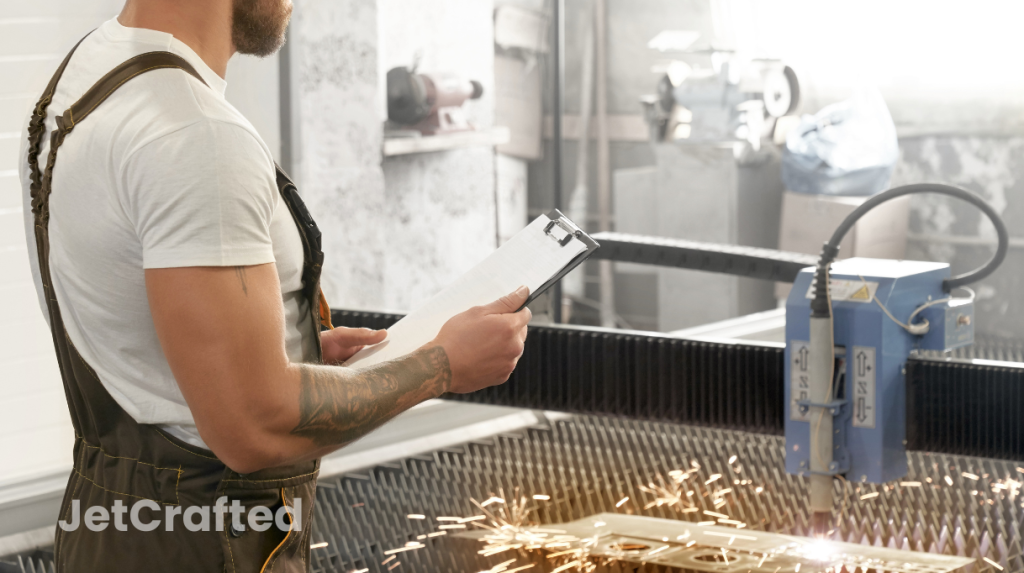
While CNC machines are highly automated, there’s still room for human assistance. However, this CNC machine operator must have a solid understanding of the machinery, be able to read G-code, and ensure the setup is correct. They must also oversee the machine during operation to confirm that everything is running smoothly, make adjustments as necessary, and conduct quality checks on the final products to ensure they meet the desired specifications.
Are CNC Machines Hard to Operate?
There’s certainly a learning curve for operators. To learn how to operate a CNC machine, you must understand both the hardware components and the software that drives them. Training is essential, and it often involves all of the above-mentioned – learning how to read and modify G-code, operate the control panel, and understand the nuances of machine setup, including tool selection and placement.
There’s no need to panic. Modern CNC machines are designed with user-friendliness in mind. Many have intuitive interfaces that simplify the operation and automation features that reduce the manual input required. Once the initial setup is complete, CNC machines can run for extended periods with minimal supervision, thanks to features like the ATC and advanced sensor systems that monitor the machining process.
What are the Different Types of CNC Machines?
While we may use “CNC machine” as a blanket term, there are, in fact, many kinds of CNC machines that serve different purposes and do varying jobs. And what are the 5 common types of CNC machines? Well, we have:
- CNC Mills: The most widely used and versatile CNC machine type. Operating primarily on the X, Y, and Z axes, these machines perform various operations such as drilling, cutting, and shaping materials ranging from metal to plastic. By adjusting the feed rate – the speed at which the cutting tool advances into the workpiece- CNC mills can achieve a delicate balance between the cut’s precision and the operation’s efficiency.
- CNC Lathes: Specialize in producing symmetrical objects by rotating the workpiece on a spindle against a stationary cutting tool. You can use this method to create designs that have a perfectly cylindrical shape. It’s commonly used in applications that require intricate internal and external geometries, such as threads and tapers.
- CNC Routers: Most often used in woodworking and sign making, they have a large bed where the material is secured, and a mobile cutting tool moves along multiple axes. While they can handle softer materials like wood and foam, these routers can also be used to cut and shape lighter metals and composites. That’s why they’re considered flexible tools.
- CNC Plasma Cutters: These machines make it easy to cut through materials such as steel and aluminum. They can conduct electricity, so the plasma cutter can go through them easily. They’re best used for applications that need rapid and cost-effective cutting of thick materials.
- CNC Laser Cutters: This type utilizes a focused laser beam to perform high-precision cutting and engraving tasks. Because they can cut intricate details and work on a wide range of materials, laser cutters are in high demand in industries that require exactness and a smooth finish, such as electronics and medical devices.
Advantages of CNC Machines
So, why use CNC machines over other manufacturing technology? It’s simple. These systems can produce precise parts with very tight tolerances. That is something that manual machines simply cannot achieve. However, that is just one of the many benefits of this technology, which include:
- Repeatability: CNC machining ensures that each part produced is virtually identical to the last, adhering to stringent tolerances and maintaining high levels of accuracy even across large production runs. This is crucial, especially in industries where all components need to be identical or fit together perfectly.
- Speed and Efficiency: Automated control, facilitated by advanced software, allows for the rapid production of parts, significantly reducing the time from design to finished product. The machinery operates at a pace that manual processes can scarcely match while also minimizing idle time between operations thanks to features like ATCs.
- Flexibility: CNC machines can swiftly switch from producing one part to another, allowing for a versatile production line capable of handling diverse designs and materials. If you’re in the business of custom or small-batch production, this is something you will benefit from.
- Less Human Error: With the process being automated and controlled by precisely designed software, the margin for error becomes significantly smaller. The result is fewer defects and less waste, optimizing material usage and reducing costs associated with scrap and rework.
- Better Safety: The automated nature of CNC machining means that the human operator isn’t required to be close to cutting tools or other hazardous components of the machinery. While workplace injuries and other risks can still occur, they won’t happen as often as when doing manual machining.
Safety Concerns
Despite the improved safety provided by CNC machines, there are still hazards related to CNC machining that must be acknowledged. The machinery operates at high speeds with significant force, which can pose risks if proper safety protocols are not followed.
Additionally, the cutting tools and swarf (metallic chips and filings) can be hazardous if not managed correctly. Therefore, adequate training, protective equipment use, and adherence to safety guidelines are imperative to ensure a safe working environment while harnessing the substantial benefits of CNC technology.
What Materials Can Be Processed By CNC Machines?
This manufacturing process isn’t preferred just because of its many applications and uses. It can also be used to produce metal and plastic parts and components from a wide array of materials, from the hardest metals and plastic to softer stuff like wood and composites.
| Material | Application | Reasons |
| Metals | ||
| Aluminum | Aircraft parts, structural beams | Lightweight, strong, corrosion-resistant, good for complex shapes |
| Steel | Gears, shafts, tools | Strong, durable, wear-resistant, ideal for high-stress applications |
| Brass | Electrical components, plumbing fixtures | Ductile, machinable, corrosion-resistant, good for intricate details |
| Titanium | Medical implants, aerospace components | Strong, lightweight, biocompatible, excellent for high-temperature environments |
| Copper | Heat sinks, electrical wiring | Highly conductive, malleable, resistant to corrosion, ideal for heat transfer |
| Stainless steel | Food processing equipment, surgical instruments | Corrosion-resistant, hygienic, easy to clean, suitable for demanding environments |
| Plastics | ||
| ABS | Automotive parts, electronics housings | Tough, impact-resistant, lightweight, and versatile for various applications |
| Polycarbonate | Eyeglasses, safety shields | Clear, shatter-resistant, lightweight, excellent for optical applications |
| Acrylic | Signage, displays, furniture components | Crystal-clear, lightweight, easy to shape and color, ideal for visual displays |
| Nylon | Gears, bearings, electrical connectors | Low friction, wear-resistant, self-lubricating, good for mechanical components |
| Wood and Composites | ||
| Hardwoods | Furniture, flooring, musical instruments | Beautiful aesthetic, strong, durable, ideal for high-end applications |
| Softwoods | Construction framing, lumber, plywood | Affordable, lightweight, readily available, suitable for general construction |
| MDF | Cabinets, doors, furniture components | Smooth surface, paintable, machinable, ideal for furniture and interior design |
| Plywood | Boatbuilding, furniture, jigs and fixtures | Strong, dimensionally stable, and versatile for structural and joinery applications |
| Laminates | Countertops, flooring, wall panels | Decorative, scratch-resistant, moisture-resistant, ideal for high-traffic areas |
| Fiberglass | Boats, automotive parts, wind turbine blades | Lightweight, strong, corrosion-resistant, ideal for complex shapes and structures |
Tips for Selecting the Best CNC Machine Type
Naturally, you want to select the best CNC machine type for your project. You must first determine the specifics of your designs, then decide if you require a machine that excels in milling, turning, or perhaps one with multi-axis capabilities for complex geometries.
However, material compatibility is equally essential, as different CNC machines are optimized for various materials, each handling the chip load and toolpath in distinct ways.
Think about the volume and precision you’ll need for your production. High-speed machining (HSM) centers are suited for projects demanding high material removal rates with exceptional accuracy.
To achieve maximum precision, look for machines that can handle tight tolerances and advanced features such as Automatic Tool Changers (ATC) to maintain consistency. Keep in mind that a robust machining center or a lathe with ample workpiece capacity might be necessary to ensure efficient workflow and repetition for large-scale production.
Budget is a significant factor when considering the cost of a CNC machine. Invest in a machine that best fits your budget and can be scaled up for future needs. Alongside cost, space is another thing to keep in mind. Ensure the machine fits inside your space without taking up too much room. That includes any additional equipment like fixtures or jigs as well.
Lastly, don’t overlook the brand of CNC machine. The best CNC machine brands often mean reliability and quality after-sales support. Research the market, read reviews, and perhaps consult with industry experts or peers to find a brand that aligns with your standards.
Alternatives to Using a CNC Machine
When it comes to fabricating parts with precision and efficiency, CNC machining is still the top choice for JetCrafted and other leading manufacturers. However, certain scenarios and specific requirements may call for alternative manufacturing techniques. Each of these alternatives is suitable for different types of operations and has individual advantages.
CNC machines are mostly used for their speed, repeatability, and ability to handle a wide array of materials and complex shapes. These alternatives offer other benefits that can be more suitable for specific applications.
You can use them to process materials sensitive to the heat generated by traditional machining. Using them will allow you to create complex geometries with additive processes, and offer you precision with non-contact methods. Some of the most used CNC alternatives are:
- Waterjet Cutting: A versatile and powerful technique that uses a high-pressure jet of water, often mixed with abrasive particles, to cut through materials. Unlike CNC machining, which involves direct contact with the workpiece, waterjet cutting eliminates the potential for thermal distortion, making it ideal for materials sensitive to high temperatures. This method can be used on many different materials, including metal, stone, and glass. It’s also known for producing clean cuts with minimal kerf.
- Additive Manufacturing: Commonly known as 3D printing, it operates on a completely different principle than the subtractive nature of CNC machining. It constructs a physical object from a digital model by layering material, thus opening up possibilities for designs that would be challenging to achieve with traditional machining. Materials range from plastics to metals, and the technique is celebrated for its rapid prototyping capabilities, allowing for swift iteration and testing of designs.
- Electro Discharge Machining (EDM), Also called spark machining, utilizes electrical sparks to shape a workpiece. This process excels in machining extremely hard materials that are tough to manipulate using conventional cutting tools. EDM is remarkably precise and capable of producing intricate details and fine holes, making it a go-to option for intricate molds, dies, and complex aerospace components. However, it’s worth noting that it’s generally slower than other methods like CNC machining.
- Laser Cutting: It’s a non-contact process, meaning the material is less likely to be contaminated or warped. Laser cutting is highly accurate and can achieve a high-quality finish with great dimensional accuracy. This method is suitable for cutting thin materials such as sheet metal and is often used for intricate designs that require precise and clean edges.
Final Thoughts: What Is A CNC Machine
Understanding what a CNC machine is goes beyond recognizing its components and functions. It’s about appreciating the intersection of precision, efficiency, and technological evolution that CNC machining represents. It’s not just about the automation of tools and the intricacies of design software like CAD and CAM. It’s about the ability to transform raw materials into precise, intricate components with accuracy that can’t be replicated by manual machining.
The future of CNC machining is bright. We can expect even bigger improvements in speed, efficiency, and the capacity to handle increasingly complex tasks. As the industry changes, so will CNC technology, making sure it keeps its place in production for years to come.
Whether you’re a seasoned engineer, a curious newcomer, or even an already established company like JetCrafted, recognizing the capabilities and ongoing progression of CNC machinery is crucial for success in the ever-advancing manufacturing landscape.
FAQs
1. What is the average cost of a CNC machine?
The average cost of a CNC (Computer Numerical Control) machine ranges widely from $2,000 for basic models to over $150,000 for advanced units, depending on capabilities, size, and complexity.
2. Can I operate a CNC machine with no prior experience?
Operating a CNC machine without prior experience isn’t recommended. Training or guidance from a skilled operator is essential to handle complex programming and operations safely and effectively.
3. What are the maintenance requirements for a CNC machine?
Regular maintenance for a CNC machine includes daily cleaning, lubrication, checking for wear and tear, and periodic calibration to ensure precision. Adherence to a maintenance schedule is crucial for optimal performance and longevity.
4. How long does it take to produce a part using CNC machining?
The time to produce a part using CNC machining varies significantly based on the complexity and size of the part, the material used, and machine speed. Simple parts may take minutes, while complex designs could require hours.
5. Are there any limits to what CNC machines can make?
CNC machines have limitations, including the size of parts they can produce, which is restricted by their work envelope. They also have limitations on the complexity of the shapes, particularly undercuts or internal features, which may not be accessible by the cutting tools.